How to Layer Necklaces Without Tangling
Layered necklaces can make a simple outfit feel more considered, but the look works best when each piece has enough space to sit naturally.
When necklaces are too similar in length, weight, or chain structure, they are more likely to twist together throughout the day. A thoughtful combination of length, texture, and weight can help keep each piece visible while making the overall look feel balanced.
This guide explains how to layer necklaces without constant tangling, how much space to leave between each layer, and how to combine pearls, natural stones, and sterling silver for an easy everyday look.
Why Do Layered Necklaces Tangle?
Necklaces naturally move as you walk, turn, sit, or adjust your clothing.
Tangling becomes more common when:
-
Two necklaces are almost the same length
-
Several fine chains sit directly against each other
-
Pendants overlap
-
Lightweight chains move around heavier pieces
-
Clasps rotate toward the front
-
Necklaces are worn too loosely
-
Several pieces have similar chain textures
The goal is not to stop all movement. A small amount of movement is normal.
Instead, the aim is to create enough separation between each necklace so that the pieces can move independently.
Start with Different Necklace Lengths
The simplest way to reduce tangling is to create clear space between each layer.
As a general starting point, leave approximately 5–8 cm, or 2–3 inches, between necklace lengths.
For example:
-
First layer: 38–40 cm
-
Second layer: 43–46 cm
-
Third layer: 50 cm or longer
You do not need to follow these measurements exactly. The visual distance between necklaces matters more than the number itself.
A short pearl or stone necklace can sit close to the collarbone while a pendant necklace falls lower on the chest.
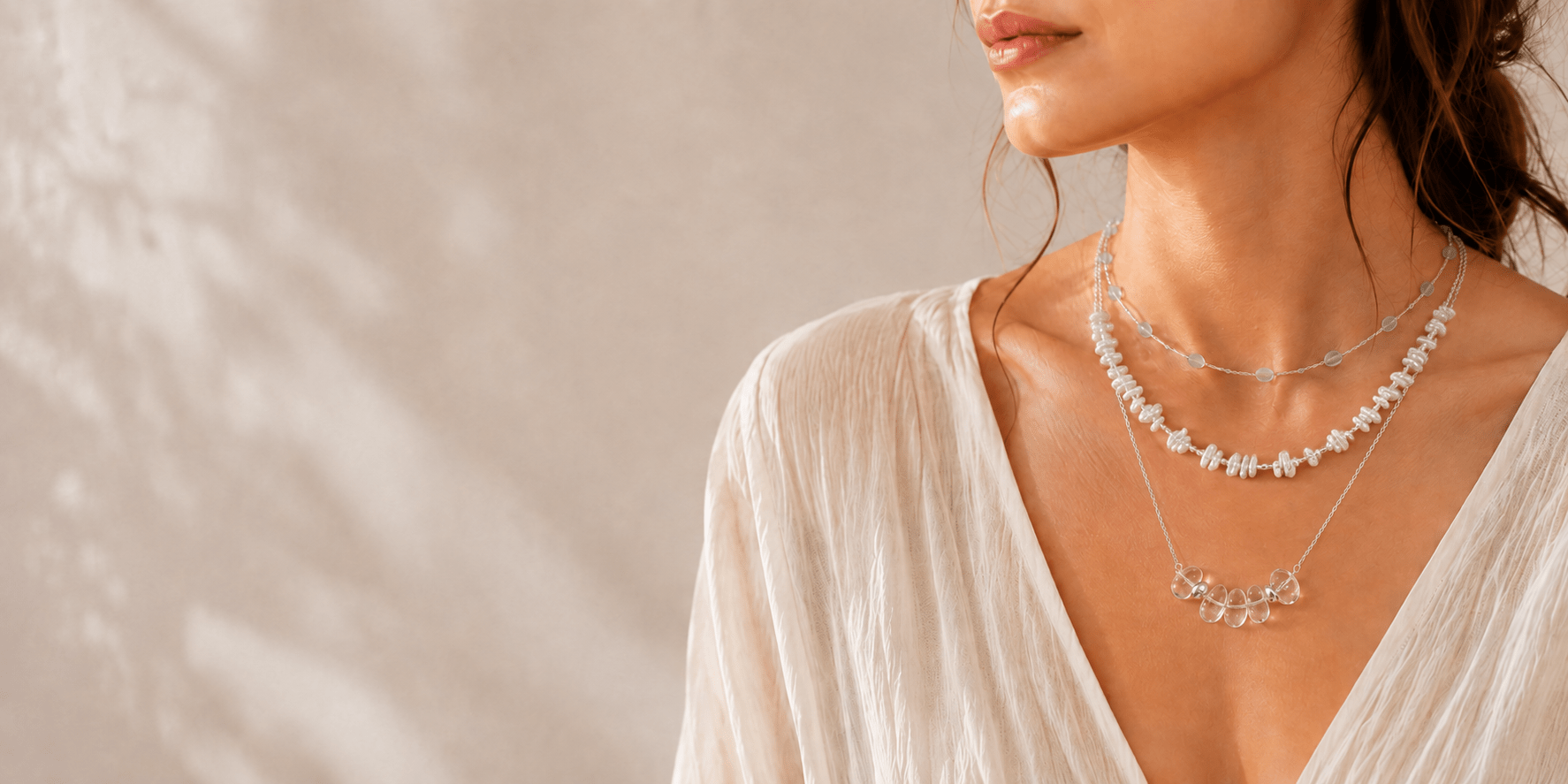
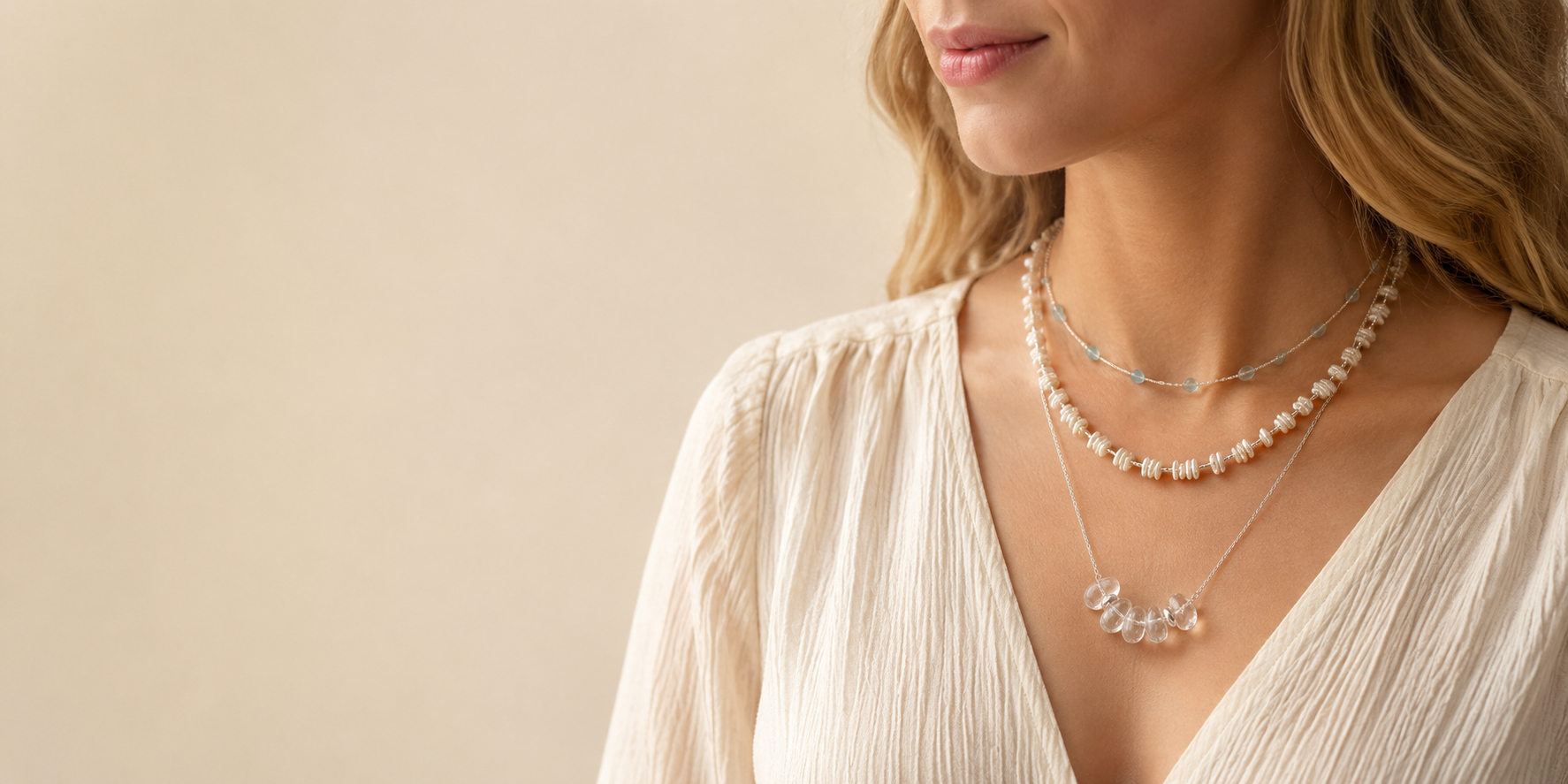
For a quieter two-layer combination, the Baroque Pearl Necklace can be worn at a shorter setting with the Clear Quartz Pendant Necklace adjusted slightly longer.
The contrast between the organic pearl texture and the vertical clear quartz pendant helps each piece remain visually distinct.
Use Adjustable Necklaces to Create Separation
Extender chains make layering much easier.
Instead of wearing every necklace at its default length, adjust each one to create intentional spacing.
You may wear:
-
The shortest necklace near the base of the neck
-
The second necklace around the collarbone
-
A pendant slightly lower
Even a difference of a few centimeters can prevent two necklaces from repeatedly falling into the same position.
Before leaving the house, look at the layers from the front and side.
Check that:
-
Each necklace is clearly visible
-
Pendants are not sitting directly on top of each other
-
Chains are not crossing near the center
-
Clasps are resting naturally at the back
-
The overall look still feels comfortable
Mix Different Textures
Layering several identical fine chains often creates more tangling because the chains move in similar ways.
Combining different textures can help.
Try pairing:
-
Pearls with a fine silver chain
-
Natural stone beads with a pendant necklace
-
Smooth beads with irregular stones
-
A structured necklace with a lighter chain
Different textures also make the layered look more visually interesting.
The Baroque Pearl Necklace, for example, has an organic, irregular surface that contrasts naturally with a finer sterling silver chain.
The Aquamarine Tube Necklace creates a lighter line around the neckline, while the Clear Quartz Pendant Necklace adds a longer vertical detail.
These differences make the individual pieces easier to read when worn together.
Balance Necklace Weight
Weight can affect how necklaces move.
A very light chain may drift across the neckline more easily than a heavier beaded necklace.
When layering:
-
Let the more structured piece act as the visual anchor
-
Give lighter chains more space
-
Avoid placing several heavy necklaces at the same length
-
Keep pendants from resting directly against larger beads or pearls
A balanced combination often includes one necklace with more presence and one lighter piece.
For example, the Black Onyx Bead Necklace creates a stronger line around the neckline. Pairing it with a finer pendant necklace can create contrast without making the combination feel crowded.
Keep the Shortest Necklace More Secure
The shortest necklace usually works best when it sits relatively close to the neck or upper collarbone.
If it is too loose, it may repeatedly drop into the second layer.
A closer first layer creates a stable foundation for the rest of the stack.
This works particularly well with:
-
Short pearl necklaces
-
Natural stone bead necklaces
-
Fine silver chains
-
Minimal chokers
-
Adjustable collarbone-length pieces
The second necklace can then sit slightly lower, creating visible separation.
Use Pendants as the Longest Layer
Pendant necklaces are especially useful for layering because they create a clear vertical point.
A pendant usually works best as the lower layer because the drop naturally separates it from shorter necklaces.
For example:
-
Wear a short pearl or aquamarine necklace near the collarbone.
-
Add the Clear Quartz Pendant Necklace below it.
-
Adjust the extender until the pendant sits clearly beneath the first necklace.
This creates visual structure without requiring three or four different pieces.
For everyday styling, two necklaces are often enough.
How to Layer Pearl Necklaces
Pearls add softness and texture, but they can also feel visually substantial.
When layering pearls, avoid combining too many similar pearl strands at the same length.
Instead, pair pearls with something lighter.
Good combinations include:
-
Pearls + fine silver chain
-
Pearls + clear quartz pendant
-
Pearls + delicate natural stone necklace
The Baroque Pearl Necklace works well as the shorter layer because its irregular pearl clusters create texture close to the collarbone.
A longer pendant underneath can add contrast while keeping the look understated.
How to Layer Natural Stone Necklaces
Natural stones already carry color, transparency, and texture, so layered styling usually works best when the combination remains restrained.
Try combining:
-
One pale stone with one clear pendant
-
One darker stone with a fine silver chain
-
One natural stone necklace with one pearl necklace
The Aquamarine Tube Necklace can be worn close to the collarbone for a pale, subtle first layer.
Pair it with the Clear Quartz Pendant Necklace at a longer setting for a soft tonal combination.
For more contrast, the Black Onyx Bead Necklace can be worn with a lighter silver or clear quartz piece.
The difference in tone helps the layers remain distinct.
Avoid Too Many Similar Chains
Three or four nearly identical chains may look delicate at first, but they are usually the hardest combination to keep separated.
If you want a refined layered look, vary at least one of the following:
-
Length
-
Chain thickness
-
Material
-
Stone size
-
Pendant shape
-
Texture
-
Weight
Even subtle differences help.
For example, instead of wearing three fine silver chains, try:
-
One pearl necklace
-
One natural stone necklace
-
One fine pendant chain
The overall effect still feels cohesive, but the pieces behave differently as you move.
How Many Necklaces Should You Layer?
There is no fixed number, but for everyday styling, two or three pieces are usually enough.
Two Necklaces
This is the easiest option.
Try:
-
One short necklace
-
One longer pendant
It creates clear separation and requires less adjustment throughout the day.
Three Necklaces
A three-layer combination works best when each necklace has a distinct role.
For example:
-
Short natural stone necklace
-
Mid-length pearl necklace
-
Longer pendant necklace
Leave enough space between the layers so the neckline does not feel crowded.
For the restrained LUNARAE aesthetic, two carefully chosen pieces will often feel more balanced than a large stack.
Match Necklace Layers to Your Neckline
Clothing can also affect how well layered necklaces stay in place.
V-Neck
A V-neck works well with:
-
A short collarbone necklace
-
A longer pendant following the direction of the neckline
This creates a natural vertical flow.
Crew Neck
With a crew neck, either keep all necklaces clearly above the fabric or let the longest piece fall well below the neckline.
Avoid placing a necklace directly on the edge of the fabric, as it may repeatedly move in and out of view.
Square Neck
A short pearl or stone necklace can sit neatly within the open space.
A second necklace can fall slightly lower, as long as both remain above the neckline.
Open Shirt
An open button-down creates a natural frame for two layered necklaces.
Try:
-
One shorter piece near the collarbone
-
One pendant slightly lower within the opening
Soft cotton, linen, and relaxed shirts work particularly well with natural stones and pearls.
How to Keep Clasps from Moving to the Front
Clasps often rotate forward when layered necklaces move against each other.
You can reduce this by:
-
Keeping the shortest necklace slightly closer
-
Separating necklace lengths
-
Avoiding several identical lightweight chains
-
Positioning clasps carefully before wearing
-
Checking the necklaces after putting on a jacket or coat
A heavier pendant may also help keep one necklace centered.
If the clasp continues to rotate, adjust the necklace slightly shorter or longer rather than leaving it at the same length as another layer.
Do Necklace Layering Connectors Help?
Necklace separators or layering clasps can help keep multiple necklaces organized.
They connect several necklaces to one clasp and help maintain spacing at the back.
They may be useful if you regularly wear the same three or four necklaces together.
However, they are not always necessary.
For two necklaces, adjusting the lengths and mixing different textures is often enough.
If you prefer a more minimal routine, begin without additional hardware and only add a connector if tangling remains a consistent problem.
What to Do If Your Necklaces Tangle During the Day
If your necklaces begin to twist together:
-
Remove them rather than pulling at the chains while they are still on your neck.
-
Lay them on a flat surface.
-
Separate the pendants first.
-
Gently loosen any knots with your fingers.
-
Avoid pulling fine chains tightly.
-
Refasten the necklaces at slightly different lengths.
Repeated tangling often means the necklaces are sitting too close together.
Changing one necklace by only a few centimeters can make a noticeable difference.
Store Layered Necklaces Separately
Do not store necklaces already tangled together in a jewelry box.
After wearing:
-
Unfasten each necklace
-
Wipe gently if needed
-
Store each piece separately
-
Keep fine chains extended rather than tightly coiled
-
Avoid placing heavy stones directly on delicate chains
Separate storage helps reduce knots and protects natural stones, pearls, and silver details from unnecessary contact.
For more care guidance, visit our Jewelry Care page.
An Easy Two-Necklace Formula
If you are unsure where to begin, use this simple formula:
One textured short necklace + one lighter pendant necklace
For example:
Or:
For a stronger contrast:
-
A longer fine silver or clear quartz pendant
The combination stays simple while still creating depth around the neckline.
Finding Your Own Layering Rhythm
Layered necklaces should not feel complicated.
The easiest combinations usually have:
-
Clear differences in length
-
A mix of textures
-
Balanced weight
-
One visual focal point
-
Enough space for each piece to move naturally
Start with two necklaces and adjust the lengths until both remain clearly visible.
From there, add a third layer only if the neckline still feels open and balanced.
At LUNARAE, our necklaces are designed with adjustable lengths, natural stones, pearls, and 925 Sterling Silver so they can be worn alone or combined in quieter everyday layers.
Explore all LUNARAE necklaces and create a combination that feels natural to wear close.