Baroque Pearl Jewelry Care
Baroque pearls are loved for their softly irregular shapes, natural luster, and organic character. Unlike perfectly round pearls, each baroque pearl has its own form — subtle, uneven, and quietly individual.
At LUNARAE, we choose baroque pearls for this natural variation. They are not meant to look identical. Their beauty comes from softness, texture, and the small differences that make each piece feel personal.
What are baroque pearls?
Baroque pearls are pearls with naturally irregular shapes. They may appear oval, elongated, softly uneven, or organic in form. Their surfaces can show subtle texture, natural lines, and variations in luster.
These differences are part of the pearl’s natural character, not flaws. No two baroque pearls are exactly alike, which is one reason baroque pearl jewelry feels so personal and quietly expressive.
Why baroque pearls need gentle care
Pearls are softer and more delicate than many stones. Their surface can be affected by moisture, perfume, lotions, sweat, and harsh chemicals.
Because of this, baroque pearl jewelry is best worn with care. It can be part of everyday dressing, but it should be treated gently and stored properly when not being worn.
How to wear baroque pearl jewelry
Put pearl jewelry on after applying perfume, lotion, sunscreen, or hair products. This helps reduce direct contact with chemicals that may affect the pearl’s surface over time.
We recommend removing pearl jewelry before showering, swimming, sleeping, exercising, or doing anything that may expose the piece to water, sweat, pressure, or impact.
Check the fit before wearing
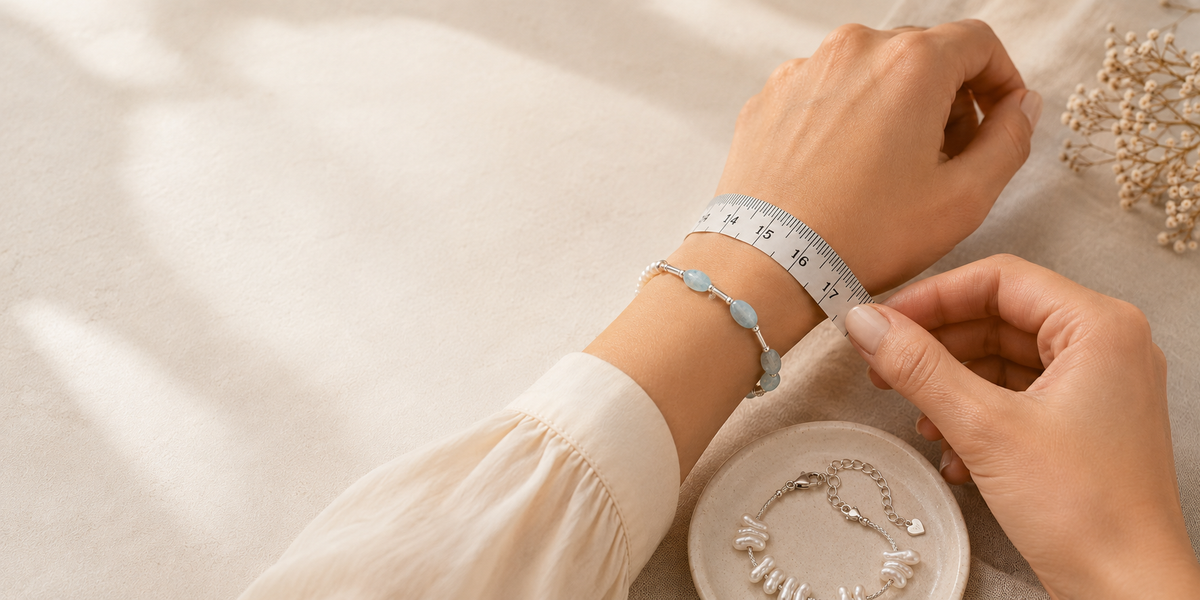
A pearl bracelet should sit comfortably without pressing into the wrist or sliding too far onto the hand. A suitable fit can also help reduce unnecessary pulling, pressure, and friction during wear.
Because pearls have more volume than a fine chain, a pearl bracelet may feel slightly closer even when the measured length is the same. Consider the pearl size, clasp design, and extender length when choosing your preferred fit.
For wrist measurement tips and guidance on close, comfortable, and loose fits, read our Bracelet Sizing Guide.
How to clean baroque pearl jewelry
After wear, gently wipe your pearls with a soft, dry cloth. This helps remove light surface residue from skin, oils, or everyday wear.
Avoid soaking pearls in water, using polishing liquids, ultrasonic cleaners, alcohol, soap, or harsh cleaning products. Gentle dry wiping is usually enough for everyday care.
How to store baroque pearl jewelry
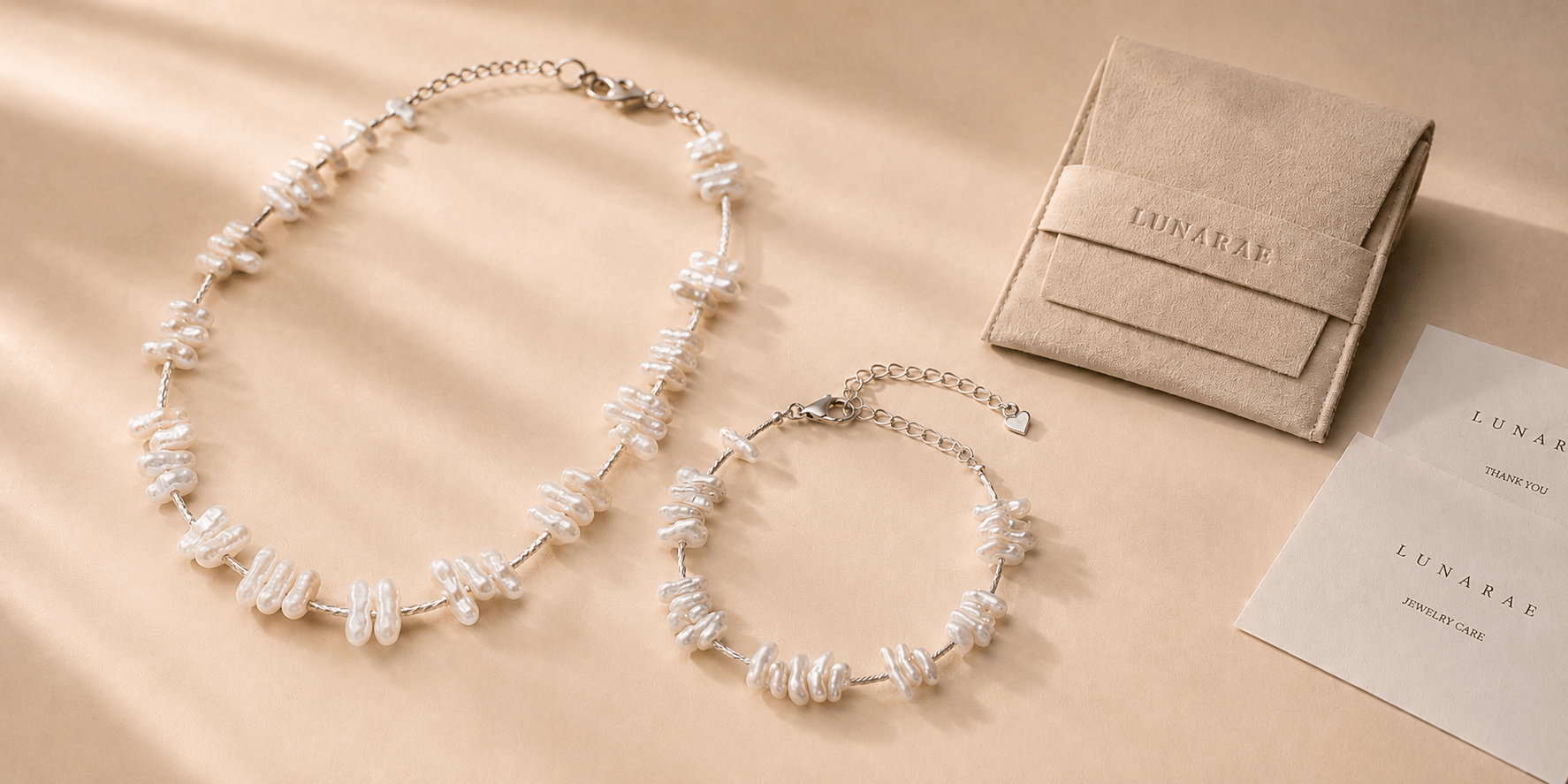
Store your piece in its soft jewelry pouch when not wearing. This helps protect the pearl surface from light scratches and keeps the piece separated from harder jewelry, metal edges, or rough textures.
Avoid storing pearl jewelry in very humid areas, direct sunlight, or tightly packed spaces where the pearls may be pressed or scratched.
Natural variation in baroque pearls
Baroque pearls may vary in shape, size, surface texture, tone, and luster. Some may appear smoother, while others may show more organic texture or irregular edges.
These variations are part of working with natural pearls. They make each piece quietly individual, rather than perfectly identical.
How to style baroque pearl jewelry
Baroque pearl jewelry works beautifully with soft neutrals, black, cream, linen, silk, knitwear, denim, and simple silver details. Its natural irregularity gives the piece a sense of ease and quiet elegance.
A baroque pearl necklace can feel refined without being too formal. A baroque pearl bracelet can add softness and texture to everyday dressing. The beauty is in the balance between polish and imperfection.
A quiet form of grace
Baroque pearls can be a reminder of softness, individuality, and quiet elegance. Their irregular shapes make them feel human and personal — beautiful without needing to be perfect.
Choose the piece that feels closest to you, and let it become part of your everyday rhythm.
Our intention notes are offered as symbolic and personal reflections. They are not medical, therapeutic, or spiritual guarantees.