How to Measure Your Wrist for a Bracelet: A Simple Size Guide
Choosing the right bracelet size starts with one simple measurement: your wrist.
A bracelet that is too tight can feel restrictive, while one that is too loose may move constantly or slide over the hand. The ideal fit depends on your wrist measurement, the structure of the bracelet, and how you prefer it to feel when worn.
This guide explains how to measure your wrist for a bracelet, how much extra length to add, and how different bracelet styles can affect fit.
How to Measure Your Wrist for a Bracelet
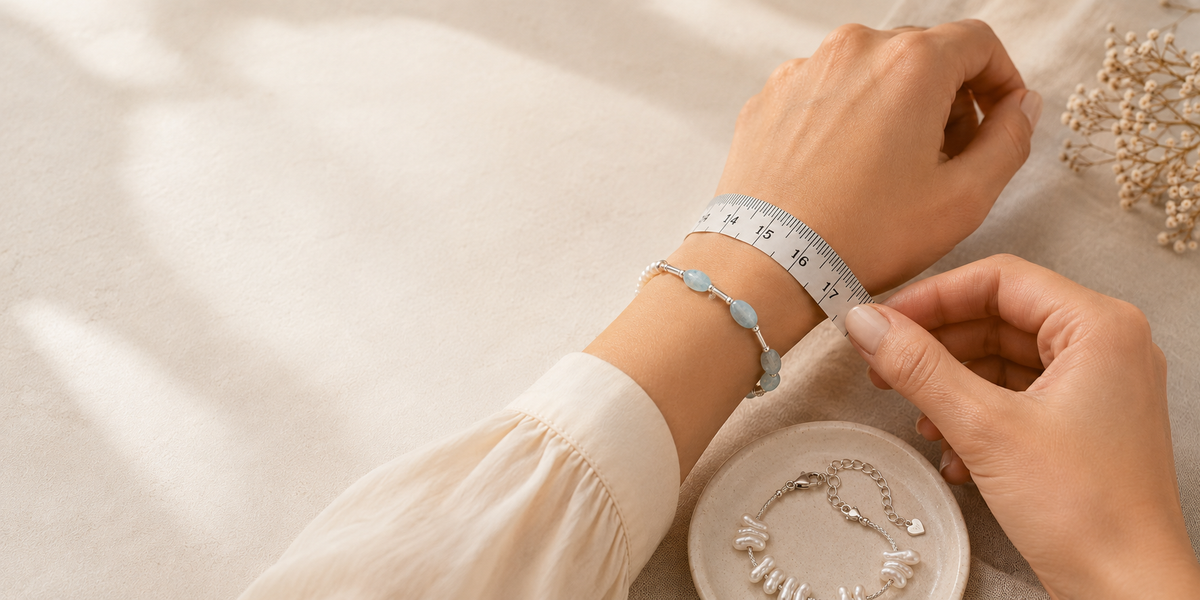
The easiest method is to use a flexible measuring tape.
Wrap the tape around your wrist where you normally wear a bracelet, usually just below the wrist bone.
Keep the tape close to the skin without pulling it tight.
The number where the tape meets is your wrist circumference.
For example, if your wrist measures 16 cm, your base wrist measurement is 16 cm.
Do not add extra length yet. First record the actual wrist measurement, then decide how much room you want the bracelet to have.
What You’ll Need
You can measure your wrist with:
-
A flexible measuring tape
-
A strip of paper
-
A piece of string
-
A ruler
If you do not have a measuring tape, wrap a strip of paper or string around your wrist, mark where the ends meet, then lay it flat against a ruler.
Try to measure in the same place where you normally wear your bracelet.
How Much Extra Length Should You Add?
Once you know your wrist circumference, add a little extra length depending on your preferred fit.
A useful starting point is:
-
Snug fit: add approximately 0.5–1 cm
-
Comfortable everyday fit: add approximately 1–1.5 cm
-
Loose fit: add approximately 1.5–2 cm
For example, if your wrist measures 16 cm:
-
Snug bracelet: around 16.5–17 cm
-
Comfortable bracelet: around 17–17.5 cm
-
Loose bracelet: around 17.5–18 cm
These measurements are only a starting point. Bracelet construction can change how a size feels on the wrist.
Snug, Comfortable, or Loose?
There is no single correct bracelet fit.
The best fit depends on the look and movement you prefer.
Snug Fit
A snug bracelet sits close to the wrist with limited movement.
This can work well for:
-
Minimal bead bracelets
-
Fine chain bracelets
-
Pieces worn close to the wrist bone
-
Bracelets you do not want moving during the day
A snug bracelet should still allow comfortable movement and should not leave deep marks on the skin.
Comfortable Fit
A comfortable fit allows a small amount of movement without sliding too far up and down the wrist.
For everyday jewelry, this is often the easiest option.
You should usually be able to slide one finger between the bracelet and your wrist.
Loose Fit
A looser bracelet moves more freely and can create a relaxed look.
This works well for:
-
Layered bracelet styling
-
Adjustable chain bracelets
-
Pieces designed to move slightly on the wrist
A bracelet should still remain secure enough that it cannot easily slip over the hand.
For more guidance on bracelet fit, read our How Should a Bracelet Fit? guide.
How Different Bracelet Styles Affect Fit
Two bracelets with the same listed length may feel very different on the wrist.
The materials and construction matter.
Beaded Bracelets
Round beads take up more internal space than a fine chain.
Larger beads can make a bracelet feel tighter even when the listed length is the same.
For example, a bracelet with natural stone beads may need slightly more room than a very fine silver chain.
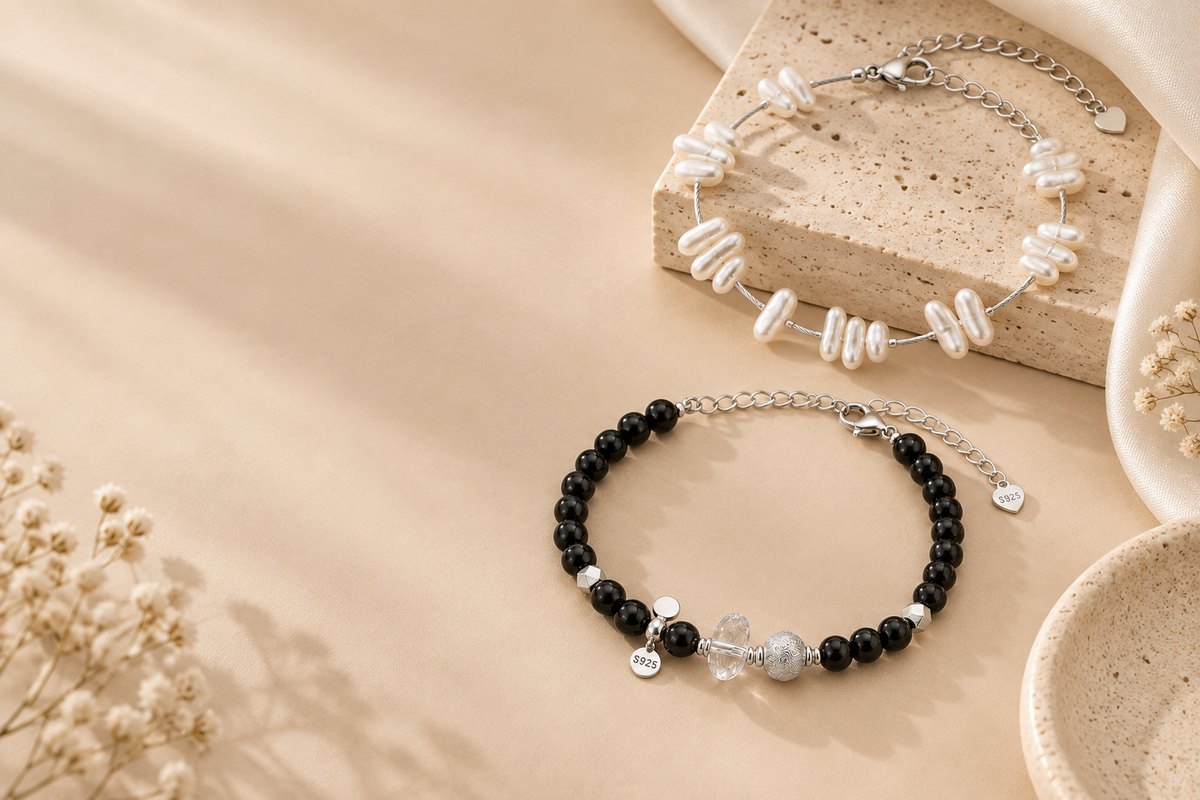
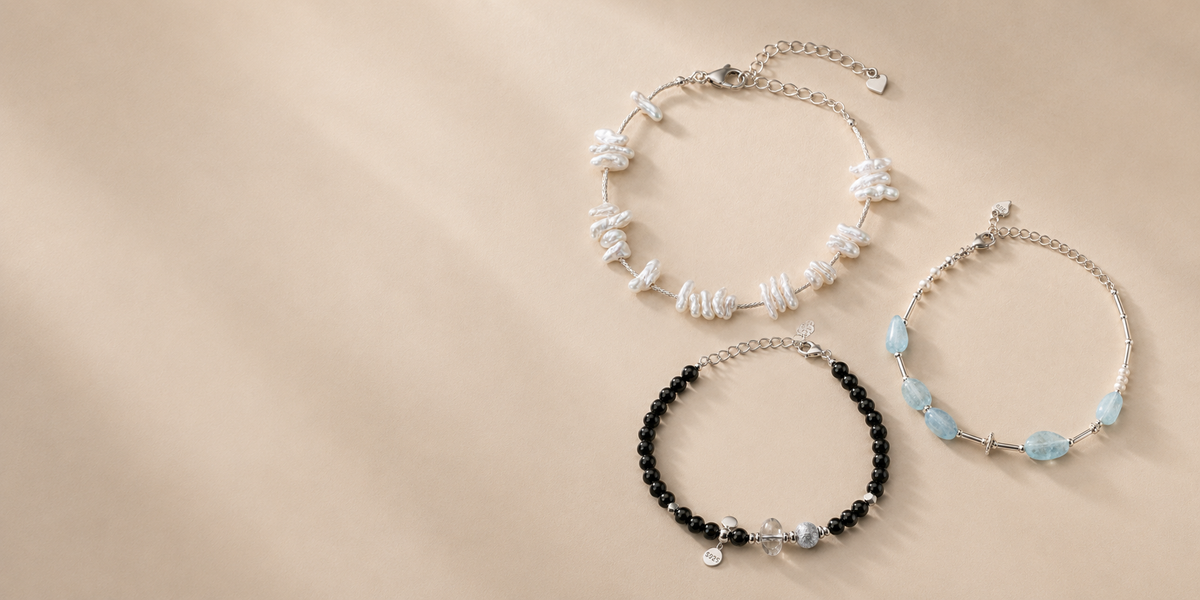
The Black Onyx & Clear Quartz Silver Bracelet combines natural stones and silver details, so the structure feels more substantial than a lightweight chain bracelet.
Fine Chain Bracelets
Fine chains usually sit closer to the wrist and require less internal space.
Adjustable extender chains also make it easier to fine-tune the fit.
Irregular Stone Bracelets
Irregular stones can create a slightly different feel because the surface is not perfectly uniform.
A bracelet such as the Clear Quartz Silver Bead Bracelet may feel different from a bracelet made entirely from small round beads.
Mixed-Material Bracelets
Bracelets combining stones, pearls, and silver can feel slightly different depending on how the materials are distributed around the wrist.
For example, the Aquamarine & Pearl Bracelet includes aquamarine, pearl, and sterling silver elements, creating a lighter but more varied structure.
Should You Measure Above or Below the Wrist Bone?
Measure where you actually plan to wear the bracelet.
Most people wear bracelets just below the wrist bone, toward the hand.
If you prefer bracelets higher on the arm, measure at that exact point instead.
Even a small change in position can affect the circumference.
This is especially important when choosing a more fitted bracelet.
How to Measure Your Wrist Without a Measuring Tape
If you do not have a flexible measuring tape:
-
Take a piece of string, ribbon, or paper.
-
Wrap it around your wrist.
-
Mark where the ends meet.
-
Lay it flat.
-
Measure the length with a ruler.
Make sure the string or paper is not stretching while you measure.
Elastic string can give an inaccurate result.
Bracelet Size Chart for Women
There is no universal bracelet sizing system, but the table below can be used as a general reference.
| Wrist circumference | Suggested bracelet length |
|---|---|
| 14 cm | 15–16 cm |
| 15 cm | 16–17 cm |
| 16 cm | 17–18 cm |
| 17 cm | 18–19 cm |
| 18 cm | 19–20 cm |
| 19 cm | 20–21 cm |
| 20 cm | 21–22 cm |
Use this chart as a starting point rather than a strict rule.
Your preferred fit and the bracelet structure should always be considered.
What If You Are Between Bracelet Sizes?
If your measurement falls between two sizes, choose based on how you prefer your bracelet to fit.
Choose the smaller option if:
-
You like a close fit
-
The bracelet is lightweight
-
The design has an extender chain
-
You do not want much movement
Choose the larger option if:
-
You prefer a relaxed fit
-
The bracelet contains larger beads
-
You plan to layer it with other bracelets
-
Your wrist size changes slightly throughout the day
When in doubt, an adjustable bracelet gives you more flexibility.
How Tight Should a Bracelet Be?
A bracelet should never feel restrictive.
You should be able to move your wrist naturally without pressure from the jewelry.
A practical test is to see whether you can comfortably slide one finger underneath the bracelet.
If you cannot fit a finger underneath at all, the bracelet may be too tight.
If you can fit several fingers underneath and the bracelet slides over the hand, it is probably too loose.
Choosing a Bracelet Size as a Gift
Choosing bracelet size as a gift can be difficult if you do not know the recipient’s wrist measurement.
A few options can help:
-
Check the size of a bracelet they already wear
-
Choose an adjustable design
-
Look for bracelets with extender chains
-
Ask someone close to them for an approximate wrist size
If you are measuring an existing bracelet, lay it flat and measure from one end to the other, excluding decorative charms that do not affect the wearable length.
If the bracelet has an extender chain, note both the minimum and maximum wearable length.
Does Wrist Size Change During the Day?
It can.
Heat, activity, hydration, and temperature can cause small changes in wrist size.
For most people, the difference is minor, but it can matter if you prefer a very snug bracelet.
If possible, measure your wrist at a normal time of day when your hands and wrists are not unusually swollen or cold.
How to Measure for Bracelet Stacking
If you plan to wear several bracelets together, you may want slightly more room.
A stack can feel tighter because multiple bracelets sit next to each other.
Try mixing:
-
One closer-fitting bracelet
-
One slightly looser bracelet
-
Different bead sizes
-
Different textures
This creates movement without making the stack feel crowded.
You can explore the full LUNARAE Bracelet Collection for natural stone, pearl, and sterling silver designs.
A Simple Bracelet Sizing Formula
If you want an easy starting point:
Wrist measurement + 1 to 1.5 cm = comfortable everyday bracelet size
For example:
16 cm wrist + 1.5 cm = approximately 17.5 cm bracelet
Then adjust slightly depending on the bracelet style and your preferred fit.
Final Thoughts
Measuring your wrist only takes a minute, but it can make a significant difference in how a bracelet feels.
Start with your actual wrist circumference, then add a small amount of extra length depending on whether you prefer a snug, comfortable, or loose fit.
Remember that bracelet structure matters too. Larger beads, natural stones, pearls, and fine chains can all feel different even when the listed length is the same.
For more detailed fit guidance, read How Should a Bracelet Fit?, or explore our Bracelet Collection to find a piece that works with your preferred fit.