How Should a Bracelet Fit? A Guide to Comfort, Movement, and Everyday Style
A bracelet should feel comfortable enough to wear throughout the day while still sitting securely on your wrist.
The ideal fit is not exactly the same for everyone. Some people prefer a bracelet that stays close to the wrist, while others like a softer, more relaxed fit that moves naturally with the hand.
The right choice depends on the bracelet design, the materials used, how you plan to style it, and the feeling you want it to create.
This guide explains how a bracelet should fit, how much room to leave around your wrist, and how to choose a fit that works with your everyday style.
How Tight Should a Bracelet Be?
A bracelet should not press deeply into your skin, restrict movement, or leave uncomfortable marks after normal wear.
At the same time, it should not be so loose that it repeatedly slides over your hand or catches against clothing and nearby objects.
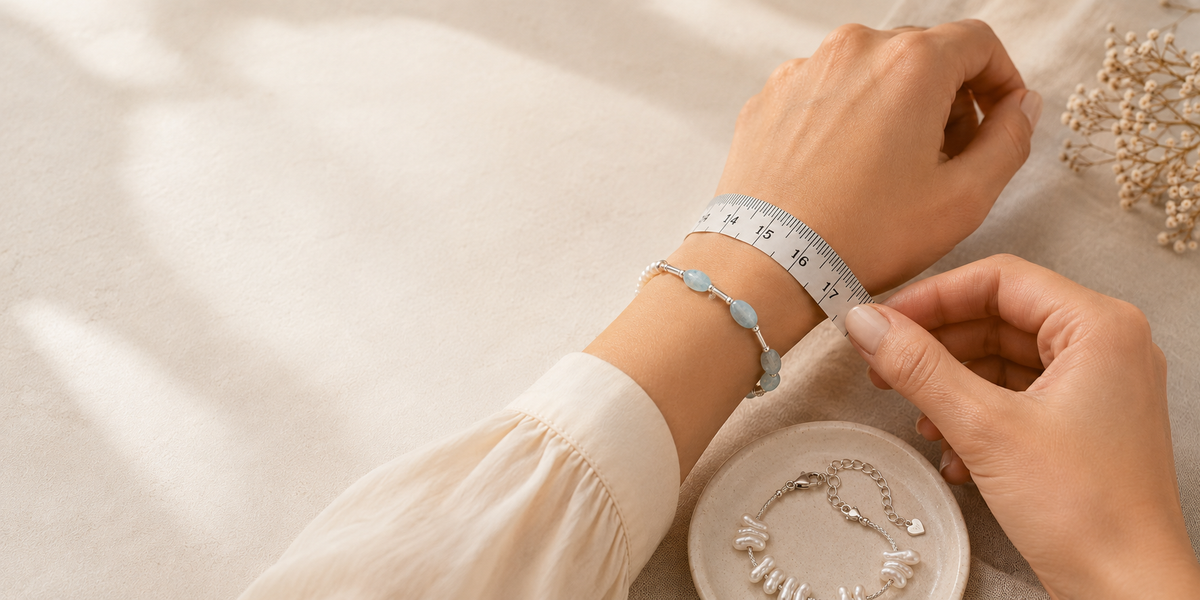
For most bracelets, a comfortable fit leaves a small amount of space between the bracelet and the wrist. You should usually be able to slide one finger between the bracelet and your skin without forcing it.
This allows the bracelet to move gently while remaining secure.
A well-fitting bracelet should:
-
Feel comfortable when you bend your wrist
-
Move slightly without rotating constantly
-
Stay above your hand during normal movement
-
Avoid pinching or pressing into your skin
-
Feel secure without appearing overly tight
Comfort should always come before a specific measurement.
The Three Main Bracelet Fits
Bracelet fit can generally be described as close, comfortable, or loose.
Close Fit
A close-fitting bracelet sits near the wrist with very little movement.
This creates a clean, minimal appearance and can work especially well for:
-
Delicate chain bracelets
-
Slim sterling silver designs
-
Bracelets worn beside a watch
-
Layered bracelet combinations
-
People who prefer less movement
A close fit should still allow your wrist to bend comfortably. It should never feel restrictive.
This style is often useful when layering several bracelets because each piece remains in a more controlled position.
Comfortable Fit
A comfortable fit leaves enough room for gentle movement without allowing the bracelet to slide over the hand.
This is usually the most versatile option for everyday wear. It works particularly well for:
-
Natural stone bracelets
-
Beaded bracelets
-
Adjustable chain bracelets
-
Mixed stone and sterling silver designs
-
Bracelets worn on their own
A comfortable fit feels relaxed without looking oversized. It also allows natural stones and silver details to settle naturally around the wrist.
For most people, this is the best place to start.
Loose Fit
A loose-fitting bracelet moves more visibly along the wrist and may sit closer to the hand.
This creates a softer, more relaxed appearance and can suit:
-
Lightweight chain bracelets
-
Delicate pearl bracelets
-
Fluid everyday styling
-
Oversized or softly draped sleeves
-
Casual layered looks
A loose fit can feel elegant, but it requires more care. If the bracelet slides too far over your hand, turns constantly, or catches frequently, it is probably too large.
Natural stone bracelets with heavier beads are usually more comfortable when they do not move excessively.
How Much Extra Room Should You Leave?
The amount of extra room depends on the fit you prefer.
As a general starting point:
| Preferred fit | Suggested extra length |
|---|---|
| Close fit | Add approximately 0.5–1 cm |
| Comfortable fit | Add approximately 1–1.5 cm |
| Loose fit | Add approximately 1.5–2 cm |
For example, if your wrist measures 16 cm:
-
A close fit may be around 16.5–17 cm
-
A comfortable fit may be around 17–17.5 cm
-
A loose fit may be around 17.5–18 cm
These measurements are general guidance rather than fixed rules.
Bead size, bracelet weight, fastening style, and the shape of the materials can all affect how a bracelet feels on the wrist.
Bracelet Fit and Bead Size
Two bracelets with the same total length may not fit in exactly the same way.
A bracelet made with larger stones or beads usually feels slightly closer than a fine chain bracelet of the same length. This is because larger materials take up more space around the inside of the bracelet.
Irregular natural stones may also sit differently from smooth, evenly shaped beads.
When choosing a natural stone bracelet, consider:
-
The diameter of the stones
-
Whether the stones are round or irregular
-
The overall weight of the bracelet
-
Whether the design includes larger silver details
-
Whether the bracelet stretches or includes an extender chain
A substantial stone bracelet often feels best with slightly more room than a fine silver chain.
For example, the Clear Quartz Bead Bracelet is made with irregular clear quartz stones and has a flexible stretch fit. The larger natural stones give it a more tactile, substantial presence, making a comfortable fit especially suitable for everyday wear.
How Should a Natural Stone Bracelet Fit?
A natural stone bracelet should usually rest comfortably around the wrist without being forced tightly against the skin.
A small amount of movement allows the stones to settle naturally and prevents the bracelet from feeling rigid.
However, too much movement can cause heavier stones to rotate underneath the wrist or knock against surfaces.
A comfortable natural stone bracelet should:
-
Follow the shape of the wrist
-
Allow the stones to move slightly
-
Keep the central design reasonably visible
-
Avoid sliding repeatedly over the hand
-
Remain comfortable during typing and everyday activities
Because natural stones vary slightly in shape, their fit can feel more organic than perfectly uniform jewelry.
These variations are part of the character of each piece.
The Smoky Quartz Stretch Bracelet, for example, combines softly irregular smoky quartz beads with a flexible construction. Its warm, translucent stones create an easy everyday piece that can be worn alone or layered with quieter silver details.
How Should an Adjustable Bracelet Fit?
An adjustable bracelet gives you more flexibility to change the fit depending on how you are wearing it.
You may prefer:
-
A closer fit when layering it with other bracelets
-
A slightly looser fit when wearing it alone
-
A relaxed fit with soft sleeves
-
A more secure fit during active parts of the day
When using an extension chain, the clasp and extender should rest naturally rather than pulling tightly against the wrist.
After fastening the bracelet, move your hand and wrist in several directions. This is a simple way to check that the bracelet remains comfortable during normal movement.
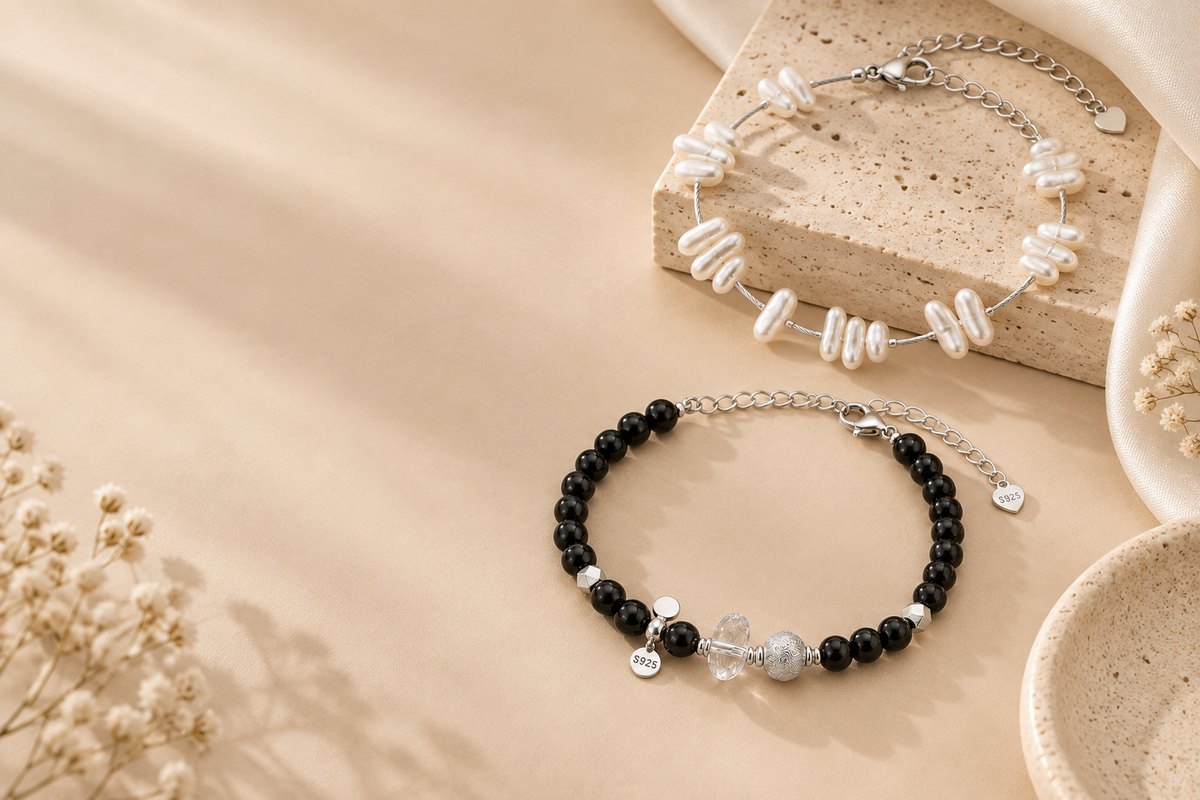
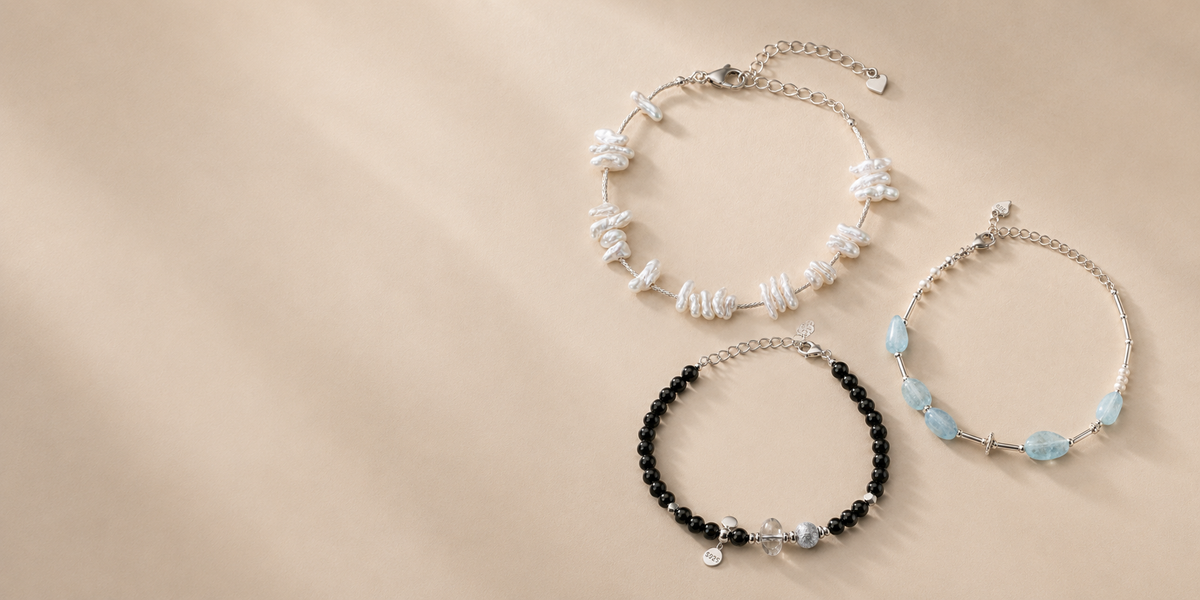
The Black Onyx & Clear Quartz Bracelet uses an adjustable construction that makes it easier to create either a more secure fit or a softer everyday drape. Its contrast of polished black onyx, clear quartz, and sterling silver also works well as a focal point when worn on its own.
How Bracelet Fit Changes the Overall Look
Fit affects more than comfort. It also changes how a bracelet looks and moves.
For a Minimal Look
Choose a closer fit.
A bracelet sitting neatly around the wrist creates a restrained and polished appearance. This works particularly well with sterling silver and simple natural stone details.
For an Everyday Look
Choose a comfortable fit.
A small amount of movement gives the bracelet a natural, effortless feel. This is ideal for pieces you plan to wear throughout the day.
For a Relaxed Look
Choose a slightly looser fit.
A bracelet resting closer to the hand can create a softer silhouette, especially when paired with relaxed sleeves, knitwear, linen, or layered jewelry.
The best fit should feel consistent with the way you normally dress.
How to Layer Bracelets Without Feeling Overcrowded
When wearing several bracelets together, fit becomes especially important.
If every bracelet is very loose, the pieces may tangle or move constantly. If every bracelet is tight, the combination can feel rigid and uncomfortable.
A balanced bracelet stack often combines:
-
One closer-fitting bracelet
-
One comfortable natural stone bracelet
-
One lighter or more flexible piece
You can also create contrast through:
-
Different stone sizes
-
Smooth and irregular textures
-
Sterling silver and natural stones
-
Delicate and more structured shapes
-
Soft neutral tones and darker accents
Leave enough room for each bracelet to move independently without overlapping excessively.
For a quieter look, limit the stack to two or three pieces and keep the materials within a related color palette.
For example, the depth of a black onyx bracelet can be softened with a lighter clear quartz or pearl piece. An aquamarine bracelet can be paired with fine silver details for a pale, understated combination.
Styling a Delicate Bracelet
A lighter bracelet can be worn slightly closer to the hand for a soft, fluid appearance.
The Aquamarine & Pearl Bracelet combines pale aquamarine, small pearl accents, and sterling silver details. Its adjustable design allows it to be worn closer to the wrist for a clean look or slightly looser alongside soft sleeves and other delicate pieces.
For an understated combination, pair aquamarine with:
-
A fine sterling silver bracelet
-
Soft ivory or pale blue clothing
-
A simple pearl detail
-
One additional bracelet with a similar visual weight
Keeping the stack light allows the natural texture of the aquamarine and pearl details to remain visible.
Styling a Pearl Bracelet
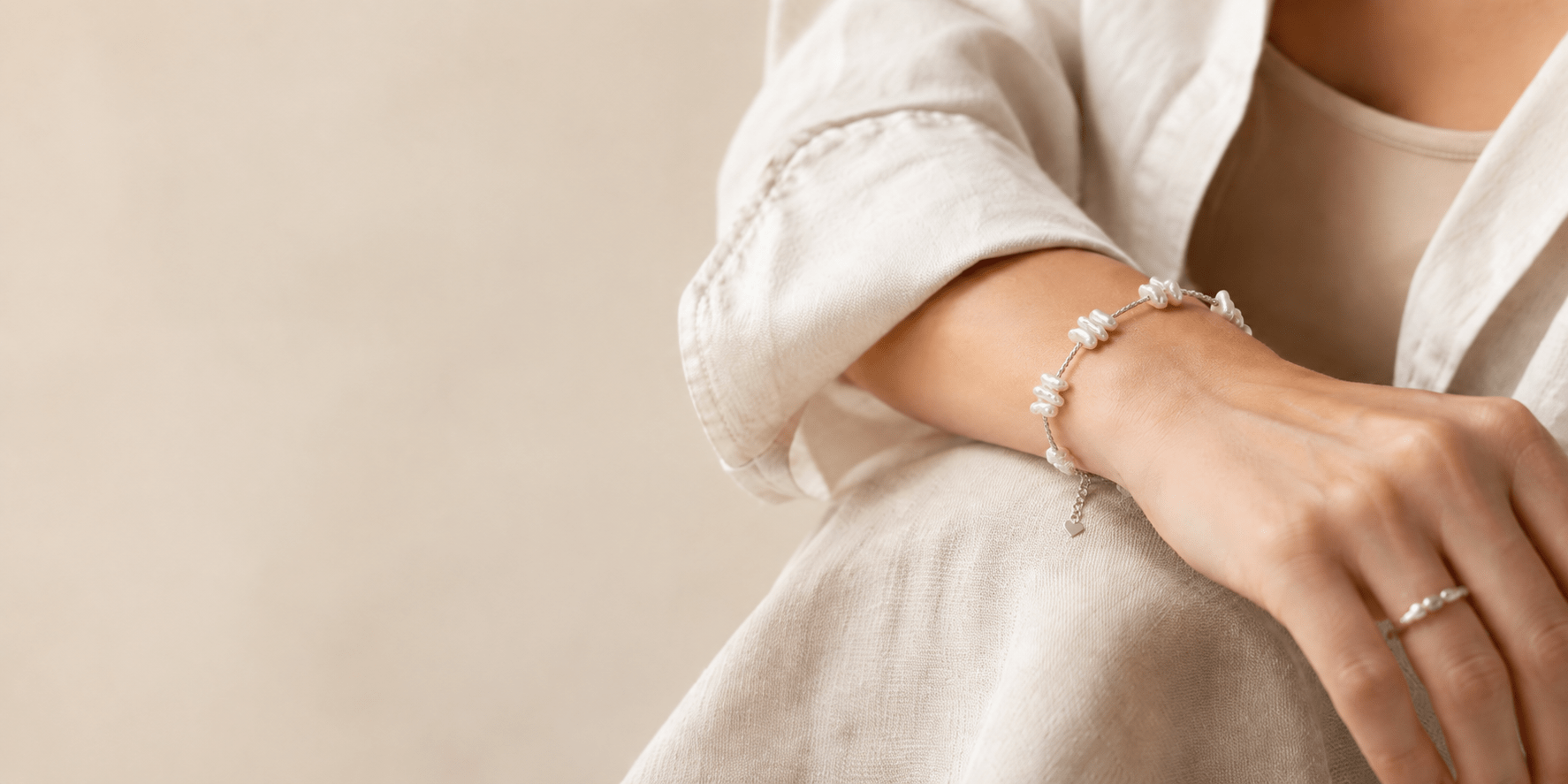
Baroque pearls bring organic shape and soft texture to the wrist.
Because each pearl is naturally irregular, a pearl bracelet does not need to sit perfectly still. A small amount of movement can complement the relaxed character of the material.
The Baroque Pearl Bracelet can be worn alone for a quiet, polished look or paired with a slim silver bracelet for subtle contrast.
For everyday styling, try pairing baroque pearls with:
-
Soft knitwear
-
Linen or cotton shirts
-
Black, cream, grey, or warm neutral clothing
-
Simple silver rings or earrings
-
One restrained natural stone bracelet
The result should feel personal and softly considered rather than overly formal.
Should a Bracelet Move on Your Wrist?
A small amount of movement is normal.
The bracelet may shift slightly when you turn your hand, type, or move your arm. This usually indicates that the fit is comfortable rather than overly tight.
However, the bracelet may be too loose if it:
-
Repeatedly falls over the hand
-
Rotates continuously
-
Catches on sleeves
-
Moves several centimeters up and down the arm
-
Feels difficult to control during everyday activities
The goal is gentle movement, not constant movement.
Signs That a Bracelet Is Too Tight
A bracelet may be too tight if:
-
It leaves deep marks
-
It pinches the skin
-
The clasp is difficult to close
-
The stones press uncomfortably into the wrist
-
Wrist movement feels restricted
-
You want to remove it shortly after putting it on
Slight temporary impressions can occasionally occur with textured or heavier jewelry, but persistent discomfort is a sign that you need more room.
Signs That a Bracelet Is Too Loose
A bracelet may be too loose if:
-
It slips over the widest part of the hand
-
The clasp constantly moves to the front
-
The central design rarely stays visible
-
It catches on objects or clothing
-
It feels insecure
-
It repeatedly knocks against hard surfaces
A bracelet that is too loose may also experience more wear because the stones and metal components come into contact with surfaces more frequently.
Which Wrist Should You Wear a Bracelet On?
There is no fixed rule.
Many people wear bracelets on their non-dominant hand because this can reduce contact with desks, phones, and other objects.
For example, a right-handed person may find it more comfortable to wear a bracelet on the left wrist.
You can also choose based on styling:
-
Wear a bracelet opposite your watch for balance
-
Combine a bracelet and watch on the same wrist for layering
-
Wear a single bracelet on the more visible wrist
-
Switch wrists depending on your outfit or activity
Comfort and personal preference matter more than convention.
How to Choose the Right Bracelet Fit for Your Style
Before choosing a bracelet, consider how you want to wear it.
Ask yourself:
-
Will I wear it alone or layered?
-
Do I prefer jewelry that stays in place?
-
Do I like a relaxed or structured look?
-
Will I wear it while working at a desk?
-
Are the stones lightweight or substantial?
-
Is the bracelet adjustable?
-
Will I wear it beside a watch?
For a clean and refined look, choose a closer fit.
For versatile everyday wear, choose a comfortable fit.
For a softer and more casual look, choose a slightly looser fit.
Finding Your Everyday Fit
The ideal bracelet should feel natural enough that you do not need to adjust it constantly.
It should sit securely, move gently, and work with the way you use your hands throughout the day.
There is no single correct fit for every bracelet. A delicate pearl bracelet, a substantial natural stone design, and a layered bracelet combination may each feel best at a different length.
Begin with your wrist measurement, consider the size and weight of the materials, and then choose the amount of movement that suits your everyday style.
At LUNARAE, our bracelets combine natural stones, pearls, and 925 Sterling Silver in restrained forms designed to be worn close.
Explore all LUNARAE bracelets and find a piece that feels comfortable, considered, and easy to make part of your everyday rhythm.