How Bracelet Materials Affect Fit and Feel
Two bracelets can be the same length and still feel completely different on the wrist.
That is because bracelet fit is shaped by more than measurement alone. The size, shape, weight, and surface of each material can affect how closely a bracelet sits, how freely it moves, and how noticeable it feels throughout the day.
Natural stone, pearl, and sterling silver each create a different wearing experience. Understanding those differences can make it easier to choose a bracelet that feels as natural as it looks.
Bracelet fit is about more than length
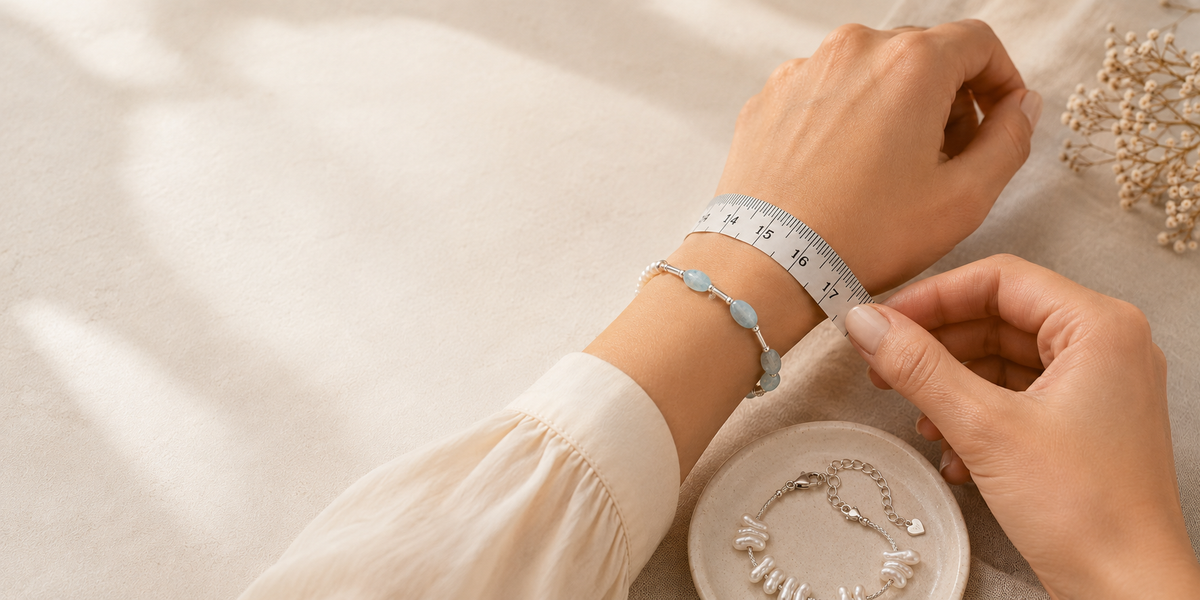
When choosing a bracelet, wrist measurement is the starting point — but not the whole story.
A bracelet made from small, smooth beads may sit closer to the wrist than another bracelet of exactly the same length made with larger stones or irregular pearls.
The materials themselves take up physical space around the wrist. This is sometimes called the bracelet’s inner circumference: the usable space inside the bracelet once the beads, stones, and metal components are taken into account.
If you are still deciding how much room you prefer around your wrist, start with our bracelet fit guide.
Round natural stone beads: smooth and substantial
Round stone beads create one of the most familiar bracelet silhouettes.
Materials such as black onyx usually have a smooth, polished surface and a little more visual and physical weight than delicate chain bracelets. Because the beads have depth, they also occupy more space around the wrist.
This means a beaded bracelet may feel slightly closer than a fine chain bracelet with the same overall measurement.
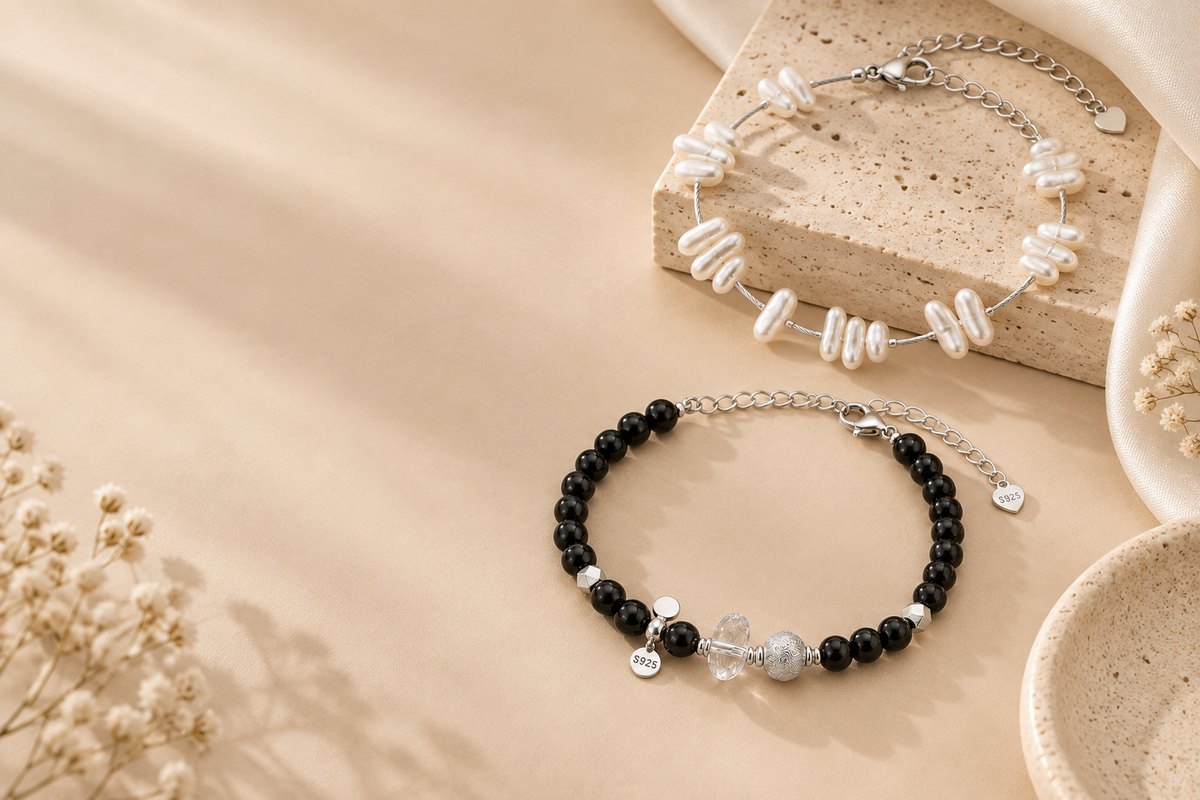
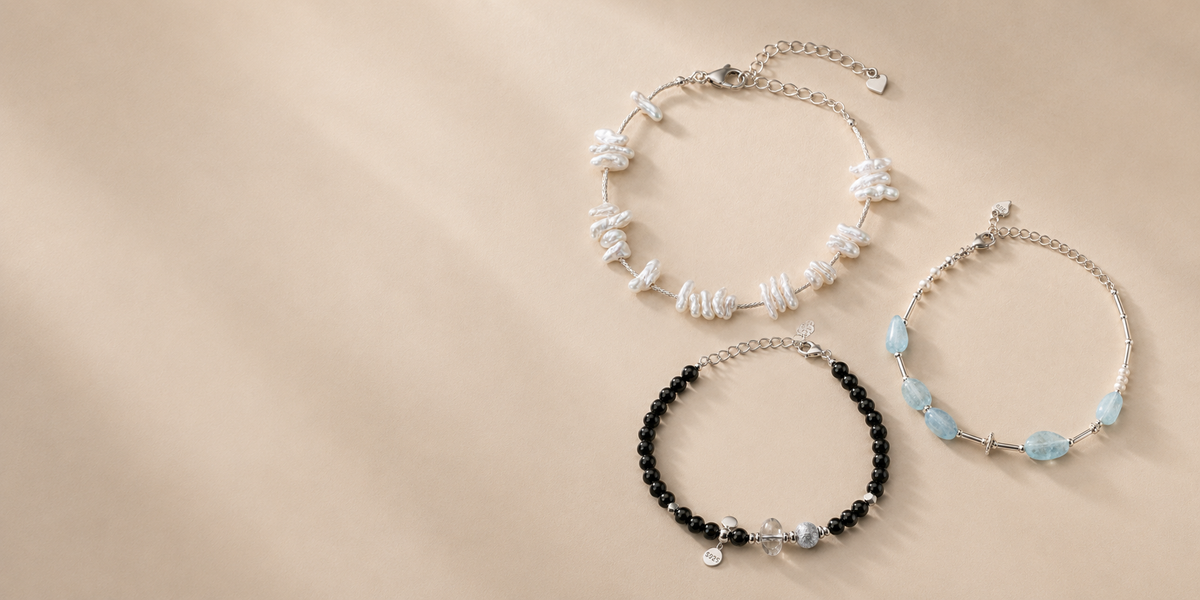
Our Black Onyx & Clear Quartz Bracelet, for example, combines polished stone beads with 925 sterling silver details. The rounded beads create a more substantial feel while still allowing the bracelet to move naturally with the wrist.
Round beads can be a good choice if you like jewelry that feels present without being rigid.
Larger or irregular stones: more movement and variation
Not every natural stone is perfectly round.
Oval, pebble-shaped, or naturally irregular stones create small variations in how a bracelet rests against the skin. Instead of forming one completely uniform circle, the bracelet may shift slightly as the individual stones move.
This can make the piece feel more organic and less structured.
Larger stones also create more depth between the wrist and the outer edge of the bracelet. For that reason, a bracelet with larger stones may benefit from slightly more ease than one made with very small beads.
The effect is subtle, but it becomes noticeable when you wear a bracelet for several hours rather than simply trying it on.
Baroque pearls: lighter, softer, and less uniform
Pearls create a different wearing experience from polished stone.
Baroque pearls are naturally irregular, so no two surfaces sit against the wrist in exactly the same way. Their uneven shapes can create more space and movement between individual pearls, giving the bracelet a less uniform feel.
They also tend to look softer and lighter than dark polished stone.
Our Baroque Pearl Bracelet uses naturally irregular freshwater pearls spaced along 925 sterling silver, so much of the bracelet remains visually open rather than forming one continuous row of beads.
That construction gives it a lighter feel on the wrist and allows the individual pearl shapes to remain visible.
Sterling silver changes the way a bracelet moves
The amount of metal in a bracelet can affect both its weight and flexibility.
Fine sterling silver chain creates fluid movement and usually follows the shape of the wrist closely. Solid silver beads, tubes, or decorative elements introduce more structure.
Mixed-material bracelets sit somewhere between the two.
A bracelet combining natural stone, pearl, and 925 sterling silver may feel lighter and more articulated than a continuous strand of similarly sized stone beads because the metal sections create small points of movement between materials.
These details are not only decorative. They are part of how the bracelet behaves when worn.
Bead size can change perceived fit
One of the easiest bracelet details to overlook is bead diameter.
Imagine two bracelets with the same outer length:
-
one uses very small beads;
-
the other uses much larger beads.
The larger beads extend farther inward as they wrap around the wrist, reducing the usable space inside the bracelet.
As a result, the larger-bead bracelet can feel more fitted even though both bracelets have the same listed length.
This is why bracelet measurements are most useful when considered together with the design itself.
Smooth materials tend to move more easily
Surface texture also affects feel.
Highly polished stones such as black onyx usually glide easily across the skin. Smooth sterling silver behaves similarly.
Irregular pearls and textured metal surfaces can create slightly more friction, so the bracelet may stay in one position for longer rather than constantly rotating around the wrist.
Neither is inherently more comfortable. The difference is mostly about personal preference.
Some people prefer a bracelet that moves freely throughout the day. Others prefer a piece that stays relatively settled against the wrist.
Weight changes how noticeable a bracelet feels
Bracelet weight does not necessarily determine comfort, but it does influence how present the piece feels.
A bracelet made primarily from larger natural stones will usually feel more substantial than a fine silver chain or an open pearl design.
That can affect styling as well.
A heavier bracelet often works naturally as a single focal piece, while lighter bracelets can be easier to layer because they introduce less bulk around the wrist.
If you enjoy stacking bracelets, mixing different weights can create a more balanced result than combining several equally substantial pieces.
Flexible construction usually feels more forgiving
Construction matters just as much as material.
A flexible bracelet can adapt to wrist movement throughout the day, while a rigid structure keeps a more consistent shape.
Chain sections, extension chains, flexible stringing, and articulated silver components all introduce movement into a bracelet.
This is why two bracelets made from the same stone can still feel very different if their construction is different.
When looking at a bracelet online, consider not only the listed measurement but also:
-
bead or stone size;
-
whether the stones are round or irregular;
-
how much sterling silver is used;
-
whether the bracelet contains chain sections;
-
how much movement exists between individual elements.
Together, these details give a much better sense of how the bracelet will actually wear.
Which bracelet material feels best?
There is no single material that creates the “best” fit.
It depends on what you want to notice — or not notice — on your wrist.
If you prefer a smooth, substantial feel, polished natural stone beads can work well.
If you like more organic movement and visual variation, irregular stones or baroque pearls create a softer, less uniform silhouette.
If you prefer something lighter and more fluid, designs with more 925 sterling silver chain and open spacing generally feel less substantial.
The most comfortable bracelet is usually the one whose size, material, and construction work together with the way you like your jewelry to move.
Finding your everyday fit
Measurements help you choose the right starting point, but comfort ultimately comes down to how a bracelet behaves once it is on the wrist.
Material, bead size, shape, weight, and construction can all change the experience.
When choosing your next bracelet, look beyond length alone. Think about whether you want something close and minimal, softly mobile, or more substantial and noticeable.
A well-chosen bracelet should not only fit your wrist.
It should feel natural enough that you want to keep wearing it.
Explore the LUNARAE Bracelet Collection to compare natural stone, pearl, and 925 sterling silver designs.