How to Layer Natural Stone Necklaces Without Tangling
Layering necklaces can make a simple outfit feel more considered, but it can also lead to crossed chains, uneven spacing, and constant tangling.
The easiest way to create a balanced necklace stack is to combine pieces with clearly different lengths, shapes, and visual weights. Start with two necklaces, leave enough space between them, and allow one piece to act as the focal point.
This guide explains how to layer natural stone necklaces in a way that feels effortless, comfortable, and easy to wear.
Start With Two Necklaces
When learning how to layer necklaces, two pieces are usually enough.
A two-necklace stack creates visible depth without making the neckline feel crowded. It is also easier to manage than three or four chains, especially when the necklaces include natural stones, pearls, pendants, or larger beads.
A simple combination might include:
-
One shorter beaded or pearl necklace
-
One slightly longer pendant necklace
The shorter necklace creates structure around the neckline, while the longer piece adds movement and a clear focal point.
Once the spacing feels balanced, a third necklace can be added later if needed.
Choose Clearly Different Necklace Lengths
The most important part of necklace layering is length.
When two necklaces sit at nearly the same level, their chains and stones are more likely to overlap. They may also compete visually instead of forming a clear layered shape.
As a general starting point, leave approximately 2 to 4 inches, or 5 to 10 centimetres, between each necklace.
For example:
-
A shorter necklace around 15 to 16 inches
-
A second necklace around 18 to 20 inches
The exact spacing will depend on the neckline, pendant size, bead shape, and how the necklaces sit on your body.
Adjustable extension chains are useful because they allow you to slightly raise or lower each piece until the spacing feels natural.
Mix Different Shapes and Textures
Layered necklaces tend to work best when the pieces are related but not identical.
Instead of pairing two necklaces with the same chain, stone size, and silhouette, combine contrasting textures.
You might pair:
-
Smooth pearls with faceted natural stones
-
A close-fitting beaded necklace with a longer pendant
-
Small, regular beads with irregular crystal shapes
-
A soft organic strand with a fine silver chain
Contrast helps each necklace remain visible.
For example, a Baroque Pearl Necklace can bring softness and organic texture, while a Clear Quartz Pendant Necklace creates a longer vertical line. The two pieces feel connected without blending into one another.
Let One Necklace Be the Focal Point
A necklace stack usually feels more balanced when one piece carries more visual weight.
This may be:
-
The longest necklace
-
A larger pendant
-
A darker natural stone
-
A necklace with larger beads
-
A piece with a more distinctive shape
The supporting necklace should add texture or contrast without competing for attention.
If both necklaces have large pendants or equally bold stone arrangements, the result can feel crowded. In that case, replace one with a simpler chain, a smaller beaded necklace, or a softer pearl strand.
The goal is not perfect symmetry. It is visual hierarchy.
Consider the Weight of Each Necklace
Weight affects how necklaces move throughout the day.
A heavier pendant often stays centred because gravity pulls it downward. A very light chain may shift more easily and wrap around another necklace.
To reduce movement, try pairing:
-
A shorter, lighter necklace
-
A longer necklace with slightly more weight
Avoid placing two lightweight chains of almost identical length together. Because they move in similar ways, they are more likely to cross and twist.
Natural stone pendants and beaded necklaces often work well in layered combinations because their weight can help define separate lines.
Match the Layers to Your Neckline
The shape of your clothing changes how a necklace stack appears.
Crew Neck
A crew neck works well with necklaces that sit above the fabric or extend clearly below it.
Avoid having a necklace rest directly on the edge of the neckline, as it may repeatedly move above and below the fabric.
V-Neck
A longer pendant can follow the shape of a V-neck and create a clean vertical line.
A shorter necklace can then sit above it, leaving enough open space between the two.
Open Collar or Button-Down Shirt
An open collar creates a natural frame for a two-necklace stack.
Try a shorter beaded necklace near the collarbone with a longer pendant underneath.
Scoop Neck
A scoop neckline leaves more open space, making it suitable for broader beaded necklaces, pearls, or a combination of two visibly different lengths.
Turtleneck
Longer necklaces usually work best over a turtleneck. A pendant or long beaded necklace can create contrast against the fabric without crowding the neck.
How to Layer Necklaces Without Tangling
Some movement is normal when wearing more than one necklace. However, a few adjustments can reduce tangling significantly.
Use Different Lengths
Clear separation is the first and most effective step. Necklaces that sit too close together are more likely to overlap.
Avoid Identical Chains
Two fine chains with similar links and weight can easily twist together. Mix a fine chain with beads, pearls, or a more structured necklace.
Balance the Weight
Place the heavier or more pendant-focused piece at the longer length. This can help it remain centred below the shorter necklace.
Fasten the Clasps in Opposite Directions
When possible, position one clasp slightly to the left and the other slightly to the right. This can reduce the chance of both clasps gathering at the same point behind the neck.
Put the Necklaces On Separately
Fasten each necklace individually and check the spacing before adding the next piece. Trying to fasten several necklaces together can create twists before they are even worn.
Check the Layers After Dressing
Fabric, collars, coats, scarves, and hair can all move the necklaces. Arrange the layers after putting on the rest of your clothing.
Use a Necklace Separator When Needed
A necklace separator or layering clasp can keep several chains connected at fixed points.
It can be useful for lightweight chains, although it may not be necessary for every combination. Heavier stone or beaded necklaces may sit more naturally when fastened separately.
Three Easy Natural Stone Necklace Combinations
The most wearable combinations usually balance length, texture, and tone.
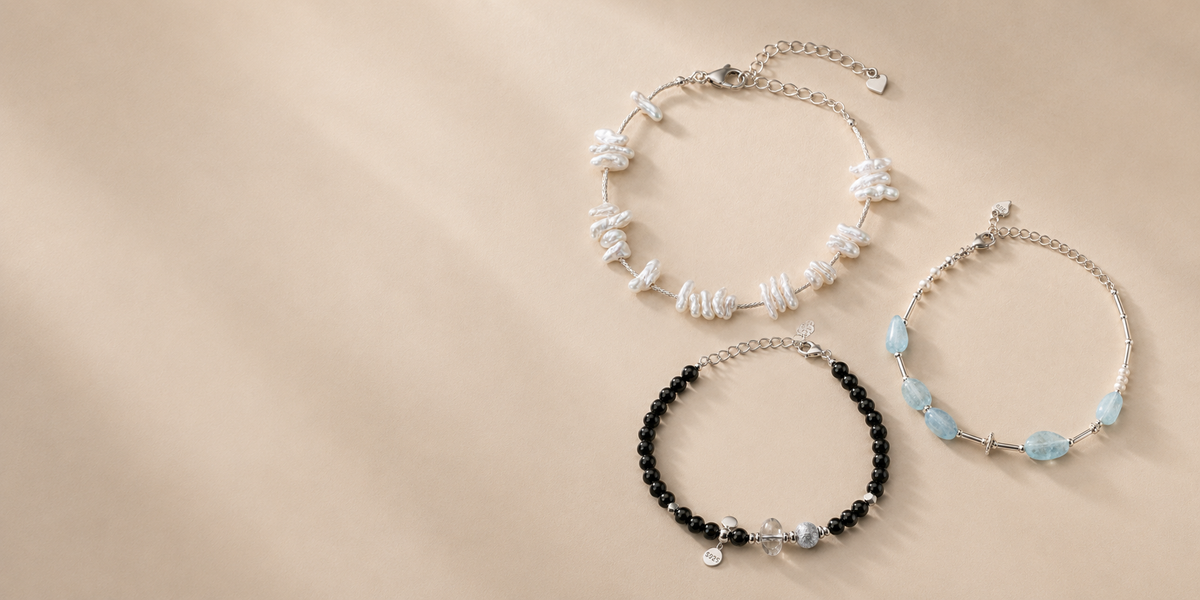
1. Baroque Pearls and Clear Quartz
Pair a shorter Baroque Pearl Necklace with a longer Clear Quartz Pendant Necklace.
The pearls create a soft, luminous line around the neckline, while the clear quartz pendant adds length and a more defined focal point.
This combination works especially well with:
-
Open collars
-
Scoop necklines
-
Minimal dresses
-
Simple knitwear
2. Black Onyx and Clear Quartz
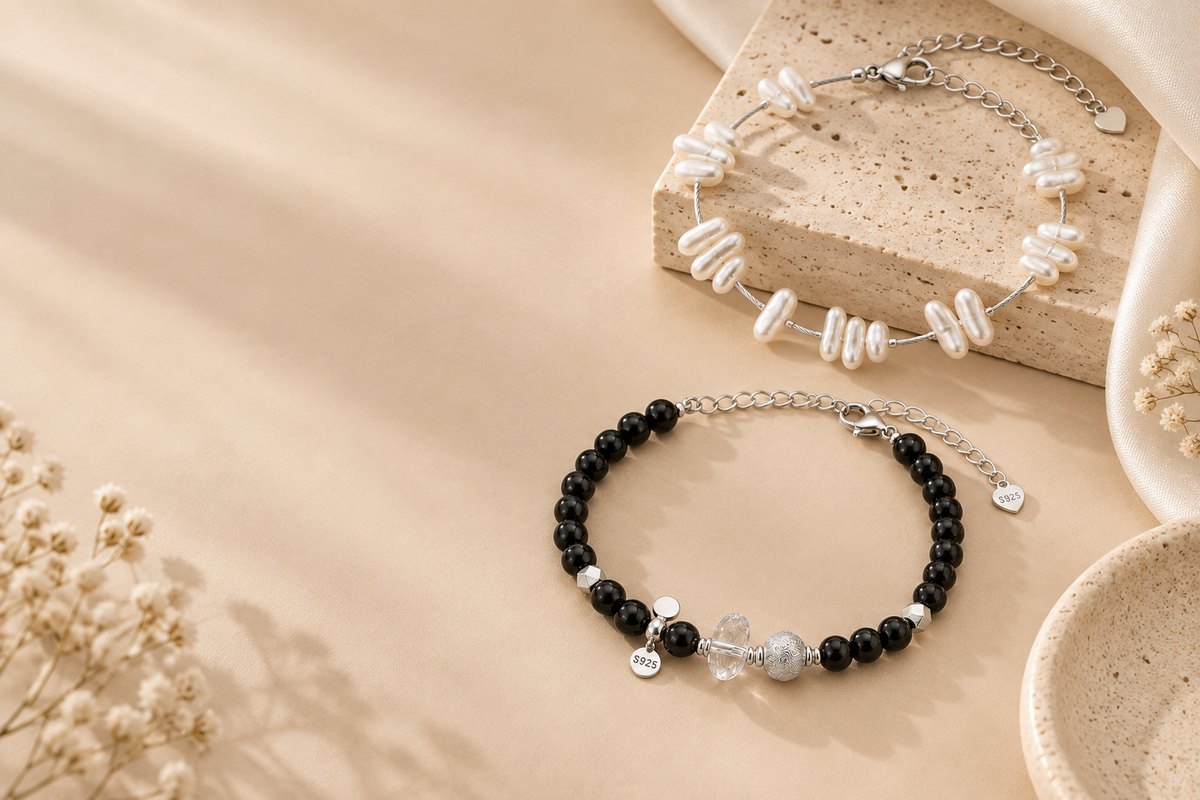
Use the Black Onyx Bead Necklace as the visual anchor, then add the Clear Quartz Pendant Necklace at a longer setting.
The polished black beads create contrast and structure, while the clear quartz pendant adds light and a more vertical focal point.
Because the two necklaces have overlapping adjustable ranges, wear the black onyx necklace near its shorter setting and the clear quartz pendant near its longest setting to create as much separation as possible.
This pairing works well with neutral clothing, including ivory, grey, black, and warm beige.
3. Aquamarine and Baroque Pearls
Pair the Baroque Pearl Necklace near the collarbone with the Aquamarine Tube Necklace at a slightly longer setting.
Aquamarine and pearls create a soft, light combination, while their different shapes keep the two necklaces visually distinct. The irregular pearls add organic texture, and the pale blue aquamarine introduces a quiet touch of colour.
Keep the lengths clearly separated so the lighter tones remain visible rather than blending together.
This combination can complement:
-
Linen shirts
-
Soft knitwear
-
Open collars
-
Ivory and pale neutral fabrics
Should You Mix Silver and Gold Necklaces?
Yes. Mixed metals can work well when the combination feels intentional.
A simple way to begin is to let one metal dominate and use the other as a smaller accent. For example, two sterling silver necklaces may be paired with one subtle gold-toned detail.
For a quieter and more cohesive look, keep the natural stone colours related. Neutral materials such as clear quartz, black onyx, smoky quartz, aquamarine, and pearls can help connect different metals.
There is no requirement for every clasp, chain, and setting to match exactly.
Can You Layer Two Pendant Necklaces?
You can, but the pendants should have different lengths and scales.
Pairing two large pendants at similar heights often creates overlap. A better approach is to combine:
-
One small pendant on a shorter chain
-
One larger pendant on a longer chain
Leave enough vertical space for both pendants to remain visible.
If the pendants repeatedly collide, replace the shorter one with a beaded or pearl necklace.
Can You Layer a Pearl Necklace With a Pendant?
A pearl necklace and pendant are one of the easiest combinations to wear.
Pearls create a continuous horizontal line, while a pendant creates a vertical shape. This contrast naturally separates the two pieces.
For a modern look, choose pearls with organic variation rather than aiming for perfect uniformity. A simple sterling silver or natural stone pendant can then sit below the pearl strand.
For an easy starting point, combine the Baroque Pearl Necklace with the Clear Quartz Pendant Necklace.
How Many Necklaces Should You Layer?
For everyday wear, two or three necklaces are usually enough.
Two necklaces create a clean, understated stack. Three can add more texture, but each piece should still have a clear role.
Before adding another necklace, consider whether it contributes:
-
A new length
-
A different texture
-
A change in shape
-
A useful focal point
If it only fills space, the stack may be stronger without it.
Keep the Styling Personal
Necklace layering does not need to follow a rigid formula.
The most successful combinations usually feel connected to the person wearing them. You may choose a necklace for its material, its colour, the memory attached to it, or the intention it represents.
Start with one piece you naturally reach for, then add a second necklace that changes the length, texture, or shape.
A considered stack should still feel easy to wear.
Explore Natural Stone Necklaces
Discover natural stone and 925 Sterling Silver necklaces designed to be worn alone or combined in quiet, considered layers.
Frequently Asked Questions
How do I keep layered necklaces from tangling?
Choose necklaces with noticeably different lengths, avoid combining identical lightweight chains, and place the heavier necklace at the longer length. A necklace separator can also help with multiple fine chains.
How much space should be between layered necklaces?
A difference of approximately 2 to 4 inches, or 5 to 10 centimetres, is a useful starting point. The ideal spacing depends on the neckline, pendant size, and necklace shape.
Can I layer beaded necklaces with chains?
Yes. Combining beads with a fine chain is often easier than layering two similar chains because the different textures help each necklace remain visually separate.
Should the longest necklace have the largest pendant?
Not always, but this is often the easiest arrangement to balance. A larger or heavier pendant usually sits more naturally on the longest chain.
Can I layer natural stone necklaces every day?
Yes, provided the necklaces are comfortable and the materials are cared for properly. Remove them before sleeping, showering, exercising, or swimming to help protect the chains, stones, pearls, and connecting components.