Necklace Length Guide: How to Choose the Right Length
Choosing the right necklace length is less about following a fixed rule and more about understanding where a necklace will sit, how it works with your neckline, and how you want it to feel when worn.
From shorter necklaces that rest near the base of the neck to longer styles that fall below the collarbone, even a few centimeters can change the way a necklace looks. This guide explains common necklace lengths, how to measure for the right fit, and how to choose a length for everyday wear, pendants, pearls, and layered necklaces.
Necklace Length Guide
Necklace lengths are usually measured from end to end, including the clasp. The same necklace can sit slightly differently from person to person depending on neck size, body proportions, bead or pearl size, pendant weight, and the shape of the neckline.
As a general reference:
- 14–15 inches (36–38 cm): sits closely around the neck, depending on neck circumference.
- 16 inches (about 41 cm): usually rests around the base of the neck or just above the collarbone.
- 18 inches (about 46 cm): often falls around the collarbone and is a versatile everyday length.
- 20 inches (about 51 cm): typically sits a little below the collarbone.
- 22–24 inches (56–61 cm): creates a longer line and leaves more space around open necklines or shorter layers.
- 28 inches and longer: falls lower on the chest and creates a more elongated look.
These are approximate placements rather than exact rules. Your neck circumference and the construction of the necklace will affect where each length actually sits.
How to Measure for a Necklace
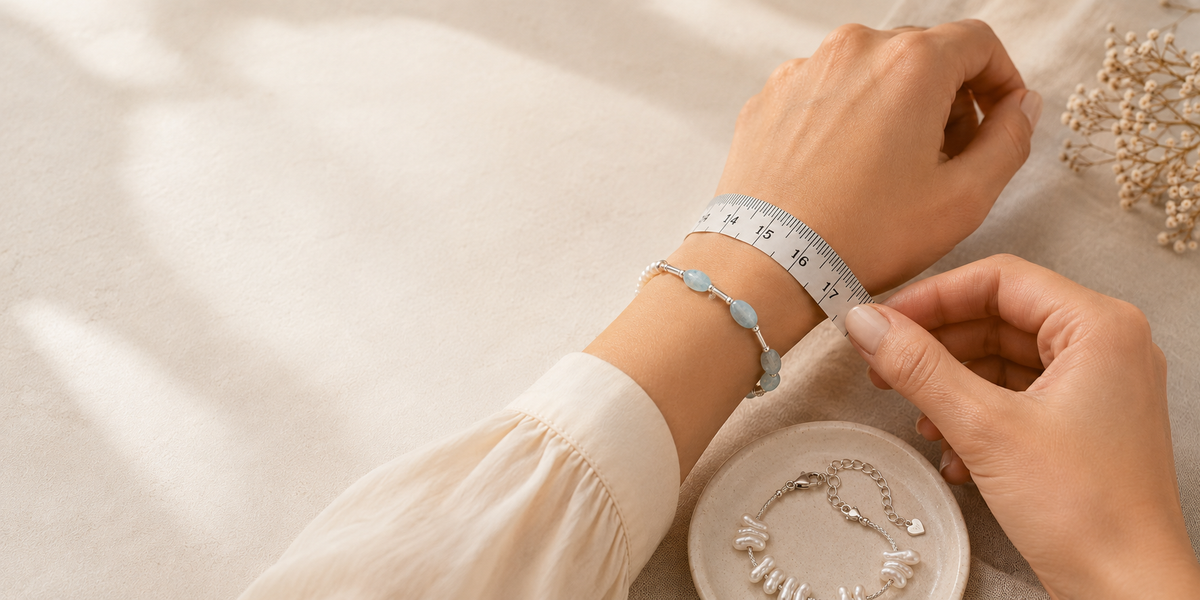
If you want a more accurate idea of where a necklace will fall, use a soft measuring tape around your neck and let it follow the path where you would like the necklace to sit.
If you do not have a measuring tape, use a piece of string or ribbon, mark the preferred length, and measure it against a ruler.
It can also help to compare the measurement with a necklace you already own and enjoy wearing.
Where Does a 16-Inch Necklace Sit?
A 16-inch necklace often sits close to the base of the neck or around the upper collarbone area. On a smaller neck it may fall slightly lower, while on a larger neck it may sit more closely.
This length can work well with open collars, scoop necks, V-necks, and simple crew necks when you want the necklace to remain relatively close to the neckline.
Where Does an 18-Inch Necklace Sit?
An 18-inch necklace is one of the most versatile everyday lengths. It commonly falls around the collarbone and leaves slightly more room than a shorter 16-inch style.
For pendants, natural stone details, or a necklace you want to wear across different necklines, this extra space can make the piece easier to style.
Where Does a 20-Inch Necklace Sit?
A 20-inch necklace generally falls below the collarbone. It can create a little more visual space around the neck and works well when you want a pendant or strand to sit lower.
It can also be useful as the longer piece in a two-necklace layered combination.
How Neck Size Changes Necklace Fit
Two people wearing the same necklace length may see different results. A necklace that sits at the collarbone on one person may sit closer to the neck on another.
This is why the listed necklace measurement should be treated as a starting point rather than a guaranteed placement. If a necklace includes an extender chain, you can fine-tune the position to suit your neckline and preferred fit.
Beads, Pearls, and Pendants Can Change the Fit
Construction matters as much as length.
A fine chain follows the neck differently from a strand of beads or pearls. Larger beads and pearls take up more internal space, so a beaded necklace may feel slightly closer than a fine chain with the same end-to-end measurement.
Pendant size and weight can also influence placement by drawing the center of the necklace downward.
For example, a Baroque Pearl Necklace creates a different visual line from a finer Aquamarine Tube Necklace, even when their wearable lengths overlap.
How to Choose Necklace Length for Your Neckline
Your clothing neckline can help determine where a necklace feels most balanced.
Crew neck
A necklace that sits above the fabric edge can create a clean separation between jewelry and clothing. A slightly longer pendant can also work when you want the necklace to fall clearly over the fabric.
V-neck
A pendant or necklace with a defined center can follow the direction of a V-neck naturally. Try to leave enough space so the jewelry does not sit directly on the edge of the neckline.
Scoop or square neckline
These open shapes leave room for shorter necklaces, pearls, beads, or layered combinations around the collarbone.
Button-down shirt
A shorter necklace can sit inside an open collar, while a longer pendant can create a more relaxed vertical line.
High neckline or turtleneck
Longer necklaces usually create clearer separation from the fabric and can help elongate the overall look.
How to Layer Necklaces by Length
Layering works best when each necklace has enough space to remain visually distinct.
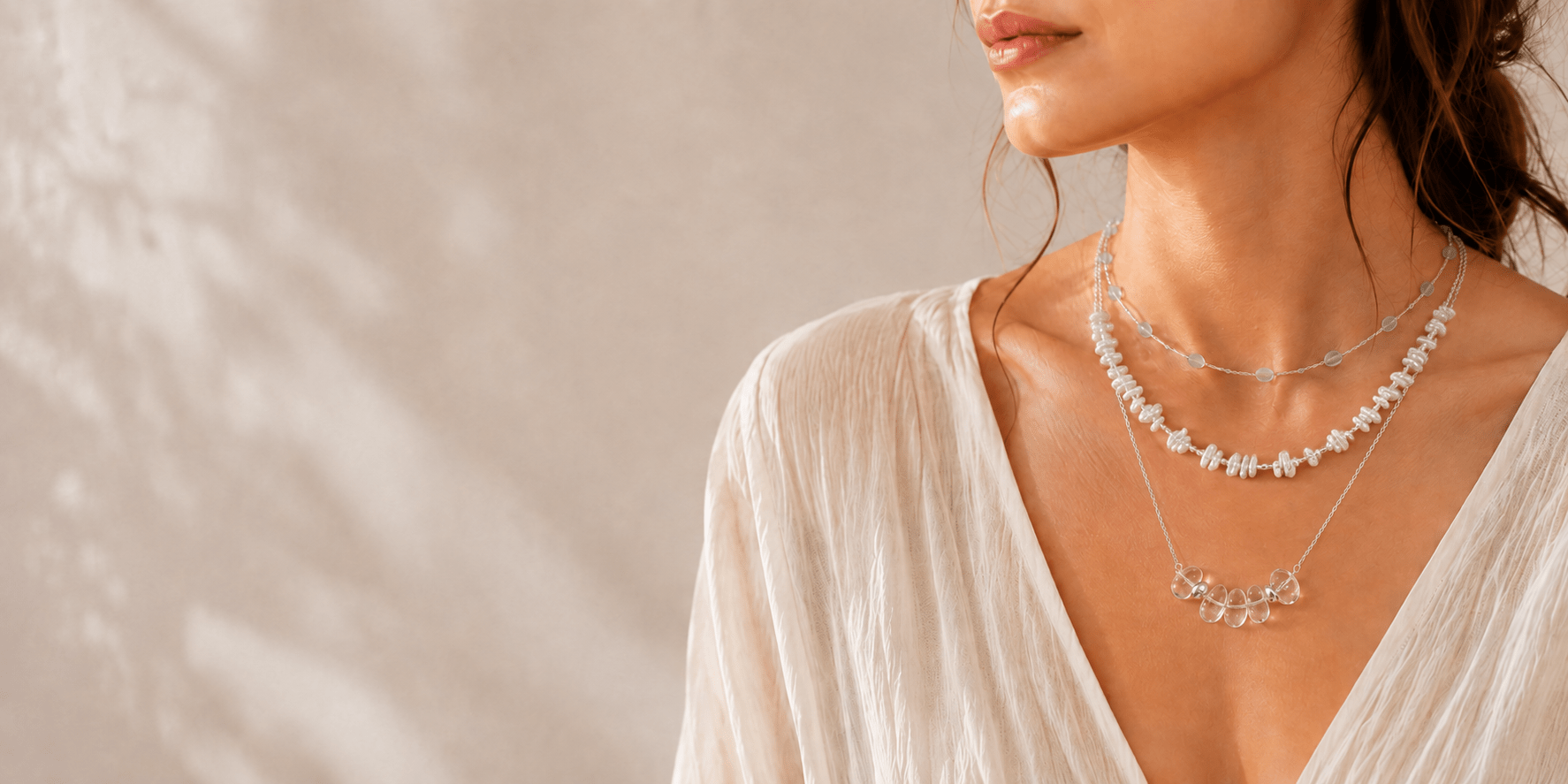
For two necklaces, start with a shorter piece near the collarbone and add a second necklace a little lower. A difference of around 2 inches can be a useful starting point, but the ideal spacing depends on pendant size, bead size, and the overall shape of each piece.
Mixing textures can also make a layered combination feel more intentional. A fine natural stone necklace can sit comfortably above a pearl strand, while a simple pendant can create a lower focal point.
For example, a shorter Black Onyx Necklace can create contrast beside a lighter necklace, while a Clear Quartz Pendant Necklace can provide a longer focal point.
How to Prevent Layered Necklaces from Tangling
Some movement is natural when necklaces are layered, but a few small choices can help reduce tangling.
- Choose necklaces with slightly different lengths.
- Avoid placing two similar pendants at exactly the same height.
- Fasten clasps securely before wearing.
- Give each necklace enough space rather than layering several pieces too closely.
- After wear, store necklaces separately or lay chains flat when possible.
For everyday cleaning and storage, see our Jewelry Care guide.
Should a Necklace Sit on the Collarbone?
It can, but it does not have to. Collarbone placement is popular because it works with many everyday necklines, but the right position depends on the necklace and the look you prefer.
A pearl or bead necklace may feel balanced close to the collarbone, while a pendant may benefit from sitting slightly lower so the center detail has more space.
What Is an Extender Chain For?
An extender chain allows you to adjust the wearable length of a necklace within a small range. This can be particularly useful when switching between different necklines or when layering two necklaces.
When viewing a LUNARAE necklace, check the Size & Fit details on the product page for the necklace length and available extension.
How to Choose a Necklace Length as a Gift
If you are choosing a necklace for someone else and do not know their exact neck measurement, adjustable designs are generally more flexible.
Think about the jewelry they already wear. If they tend to choose small necklaces close to the collarbone, a shorter adjustable style may feel familiar. If they often wear pendants or layered jewelry, a slightly longer option may offer more styling flexibility.
When in doubt, check both the necklace measurement and extender length rather than relying on a general label such as “short” or “long.”
So, What Necklace Length Should You Choose?
Start with three things: where you want the necklace to sit, what you usually wear, and how the necklace itself is constructed.
For an everyday necklace near the collarbone, shorter to mid-length styles are often easy to wear. For pendants, layering, or more visual space, a slightly longer length may work better. If the necklace includes an extender, use it to adjust the placement rather than treating one measurement as fixed.
The right necklace length is ultimately the one that feels comfortable, works naturally with your wardrobe, and lets the piece sit where you want it to.